
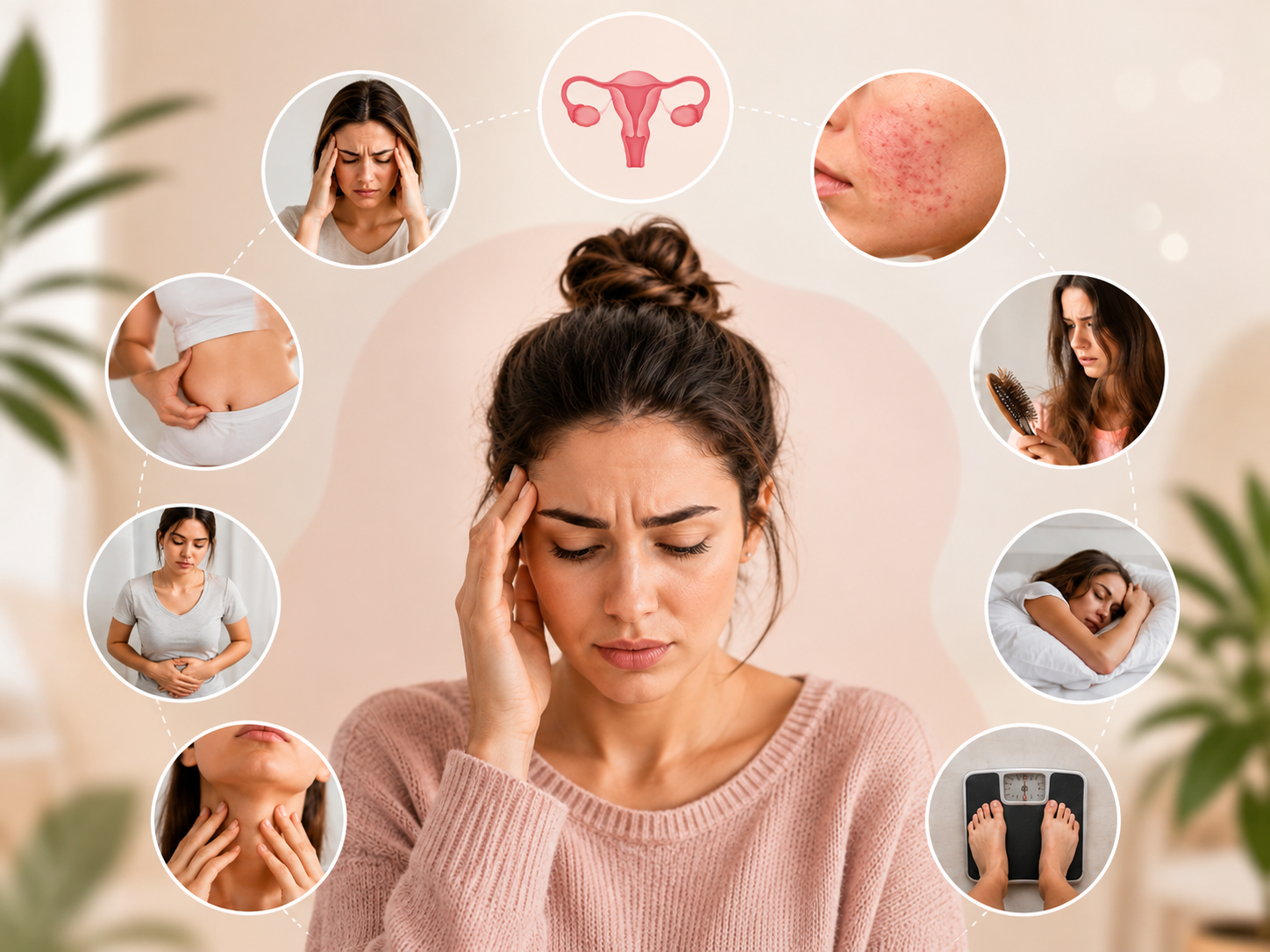
If you’re wondering what are the signs of hormonal imbalance in women, the answer can be more complex than you might expect. Hormones influence your menstrual cycle, mood, sleep, metabolism, skin, hair, fertility, and many other body functions. Changes in hormone levels can therefore produce a wide range of symptoms.
Occasional hormonal fluctuations are normal, particularly around periods, pregnancy, perimenopause, and menopause. However, persistent or unexplained symptoms may indicate an underlying health condition that deserves medical attention.
Here are 15 warning signs of hormonal imbalance in women and answers to some of the most common questions about hormonal health.
What Is a Hormonal Imbalance in Women?
What does hormonal imbalance mean?
A hormonal imbalance occurs when the body has too much or too little of one or more hormones.
Hormones are chemical messengers produced by glands and organs throughout the body. They help regulate functions including:
- Menstrual cycles
- Ovulation
- Metabolism
- Blood sugar
- Sleep
- Mood
- Reproduction
- Growth and development
A change in hormones does not automatically mean something is wrong. Hormone levels naturally fluctuate throughout a woman’s life. Persistent symptoms, however, may need further investigation.
What Are the Signs of Hormonal Imbalance in Women?
How do you know if your hormones may be imbalanced?
There is no single symptom that confirms a hormonal imbalance. The signs depend on which hormones are affected and what is causing the change.
Some of the most commonly reported symptoms include the following.
1. Irregular Periods
Can hormonal imbalance cause irregular periods?
Yes. Irregular, missed, unusually frequent, or changing periods can sometimes be associated with hormonal changes.
Conditions such as Polycystic Ovary Syndrome (PCOS), thyroid disorders, and perimenopause can affect ovulation and menstrual regularity.
If your periods suddenly change or remain irregular, speak with your GP.
2. Unexplained Weight Changes
Can hormonal imbalance cause weight gain?
Hormonal conditions can sometimes contribute to unexplained weight gain or difficulty managing weight.
Thyroid disorders, PCOS, menopause-related changes, and conditions affecting cortisol can influence metabolism and body composition.
Weight changes alone, however, do not prove that you have a hormonal imbalance.
3. Persistent Acne
Can hormones cause acne in adult women?
Yes. Hormonal fluctuations can increase oil production and contribute to acne.
Hormonal acne may commonly appear around the:
- Chin
- Jawline
- Lower face
- Neck
Persistent acne accompanied by irregular periods or increased facial hair may warrant further assessment.
4. Excess Facial or Body Hair
Why am I suddenly growing more facial hair?
Increased facial or body hair in women is known as hirsutism and may be associated with higher androgen activity.
PCOS is a common cause, although other conditions and certain medications can also contribute.
5. Hair Thinning or Hair Loss
Can hormonal imbalance cause hair loss?
Yes. Changes involving thyroid hormones, androgens, pregnancy, menopause, or other factors can affect the normal hair-growth cycle.
Because nutritional deficiencies, stress, medications, and other conditions can also cause hair loss, persistent thinning should be properly assessed.
6. Mood Changes
Can hormones affect your mood?
Hormonal fluctuations can influence brain chemicals involved in emotional wellbeing.
Some women notice:
- Irritability
- Mood swings
- Feeling low
- Increased emotional sensitivity
Mood symptoms can have many causes, so persistent or severe changes should not automatically be attributed to hormones.
7. Persistent Fatigue
Can hormonal problems make you feel tired all the time?
Yes. Certain hormonal conditions, including thyroid disorders, may contribute to persistent tiredness.
However, fatigue can also result from anaemia, poor sleep, nutritional deficiencies, stress, infection, and numerous other conditions.
8. Sleep Problems
Can hormonal changes affect sleep?
Yes. Hormonal changes associated with the menstrual cycle, pregnancy, perimenopause, and menopause can affect sleep.
Night sweats and hot flushes during perimenopause or menopause can make uninterrupted sleep particularly difficult.
9. Hot Flushes and Night Sweats
Are hot flushes a sign of hormonal changes?
They can be.
Hot flushes and night sweats are commonly associated with perimenopause and menopause as hormone levels change.
If these symptoms occur unexpectedly or significantly affect your daily life, discuss them with your healthcare provider.
10. Vaginal Dryness
Can hormonal imbalance cause vaginal dryness?
Changes in oestrogen levels, particularly around menopause, can lead to vaginal dryness and discomfort.
Some women may experience:
- Dryness
- Irritation
- Discomfort during sex
- Changes in vaginal health
Treatment options are available, so these symptoms do not need to be endured silently.
11. Reduced Sex Drive
Can hormones affect libido?
Yes. Hormones can influence sexual desire, although libido is also affected by stress, relationships, medications, sleep, physical health, and psychological wellbeing.
A persistent change in libido may therefore have several possible explanations.
12. Headaches
Can hormonal changes cause headaches?
Some women notice headaches or migraines around particular stages of their menstrual cycle.
Changes in oestrogen levels may contribute to menstrual migraines in susceptible women.
Tracking when headaches occur can help identify whether there is a pattern.
13. Fertility Difficulties
Can hormonal imbalance affect fertility?
Yes. Hormones regulate ovulation, so conditions that disrupt normal hormone function can sometimes make conception more difficult.
PCOS and certain thyroid disorders are examples of conditions that may affect ovulation or reproductive health.
14. Changes in Your Period Flow
Can hormones make periods heavier or lighter?
Yes. Hormonal changes can alter menstrual flow.
You may notice:
- Heavier periods
- Lighter periods
- Longer periods
- Shorter periods
- Bleeding at unexpected times
Abnormal bleeding can have many causes and should be assessed when persistent or concerning.
15. Difficulty Concentrating
Can hormonal changes cause brain fog?
Some women report difficulty concentrating, forgetfulness, or “brain fog”, particularly during perimenopause and menopause.
However, concentration problems can also be related to poor sleep, stress, mental health, medication, and other medical conditions.
What Causes Hormonal Imbalance in Women?
Why do women’s hormones become imbalanced?
Hormonal changes can have many causes, including:
- PCOS
- Thyroid disorders
- Pregnancy
- Perimenopause
- Menopause
- Certain medications
- Significant weight changes
- Some endocrine conditions
The cause cannot usually be identified from symptoms alone.
How Is Hormonal Imbalance Diagnosed?
Is there a test for hormonal imbalance?
There is no single test that checks every hormone or diagnoses every possible hormonal condition.
Your GP or specialist may review your symptoms, menstrual history, medications, medical history, and other factors before deciding whether tests are appropriate.
Depending on your symptoms, investigations may include blood tests or other diagnostic tests.
When Should You See a Doctor About Hormonal Symptoms?
When should hormonal symptoms be checked?
Consider speaking with your GP if you experience persistent or unexplained:
- Irregular periods
- Significant weight changes
- Excess facial hair
- Hair loss
- Persistent acne
- Fertility difficulties
- Severe fatigue
- Hot flushes or night sweats
- Abnormal vaginal bleeding
You should also seek medical advice if symptoms are worsening or affecting your quality of life.
Can Hormonal Imbalance Be Treated?
How are hormonal problems treated?
Treatment depends on the underlying cause rather than the symptoms alone.
Depending on the diagnosis, management may involve lifestyle changes, medication, hormonal treatments, or treatment of an underlying condition such as PCOS or a thyroid disorder.
Avoid self-diagnosing or taking hormone supplements without professional medical advice.
Frequently Asked Questions
1. What are the most common signs of hormonal imbalance in women?
Common symptoms can include irregular periods, acne, unexplained weight changes, excess facial hair, hair thinning, fatigue, sleep problems, hot flushes, vaginal dryness, mood changes, and fertility difficulties.
2. Can hormonal imbalance cause irregular periods?
Yes. Hormonal conditions such as PCOS and thyroid disorders, as well as perimenopause, can affect ovulation and menstrual regularity.
3. Can hormonal imbalance cause weight gain?
Some hormonal conditions can contribute to weight changes, but weight gain has many possible causes and does not necessarily indicate a hormonal disorder.
4. How do I know if I have a hormonal imbalance?
Symptoms alone cannot confirm a hormonal imbalance. A healthcare professional can assess your symptoms and decide whether blood tests or other investigations are necessary.
5. Should I see a GP or gynaecologist for hormonal symptoms?
A GP is often a suitable first point of contact in the UK. Depending on your symptoms and test results, you may then be referred to a gynaecologist, endocrinologist, or another specialist.
Final Thoughts
Understanding what are the signs of hormonal imbalance in women can help you recognise changes in your body, but symptoms such as fatigue, acne, weight changes, irregular periods, and mood changes can have many different causes.
Rather than assuming hormones are responsible, pay attention to persistent changes and discuss them with your GP or another qualified healthcare professional. Identifying the underlying cause is more important than treating individual symptoms without a diagnosis.
Early assessment can help you receive appropriate treatment and make informed decisions about your reproductive and overall health.
Medical Disclaimer
This article is provided for general educational and informational purposes only and does not replace professional medical advice, diagnosis, or treatment. Hormonal symptoms can have many possible causes. If you have persistent, severe, or concerning symptoms, consult a qualified GP or healthcare professional for individual assessment and advice.