
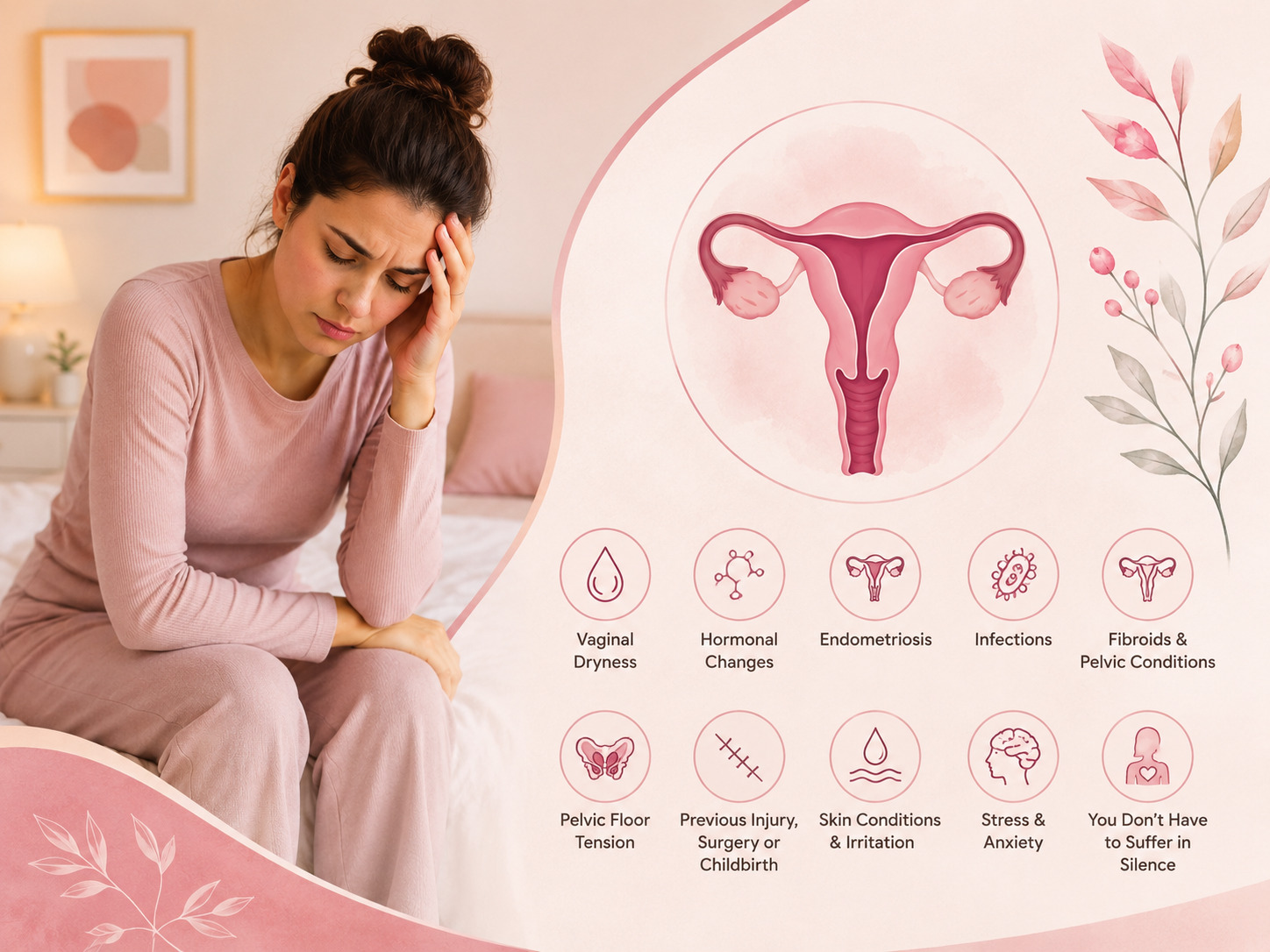
If you are wondering why does sex hurt, you are not alone. Pain during sex, medically known as dyspareunia, can happen for many reasons, including vaginal dryness, hormonal changes, infections, endometriosis, pelvic conditions, pelvic floor problems and psychological factors. Pain may occur at the entrance of the vagina, during penetration, deep inside the pelvis, or after sex.
Pain during sex is not something you simply have to tolerate. If it happens repeatedly, becomes worse, or affects your relationship or quality of life, speaking with a GP or gynaecologist can help identify the underlying cause.
What Does Pain During Sex Mean?
What is painful sex called?
Pain during or after sexual intercourse is called dyspareunia. The pain can feel different from woman to woman. It may feel like burning, soreness, pressure, aching or sharp pain.
The location of the pain can also provide useful clues about the possible cause.
For example:
- Pain at the vaginal entrance may be associated with dryness, irritation, infection or pelvic floor muscle tension.
- Deep pain may sometimes be associated with conditions affecting the pelvis, such as endometriosis.
- Burning or soreness may be linked to vaginal dryness or irritation.
- Pain after sex can sometimes occur with conditions that cause inflammation or pelvic pain.
Because there are many possible causes, persistent painful sex should be assessed rather than self-diagnosed.
Why Does Sex Hurt?
Why does sex hurt for women?
There is no single answer to why does sex hurt. Pain can result from physical, hormonal, gynaecological, urinary or psychological factors.
Some common causes include:
- Vaginal dryness
- Menopause and perimenopause
- Endometriosis
- Vaginal infections
- Pelvic inflammatory disease
- Pelvic floor muscle tension
- Vulval or vaginal skin conditions
- Fibroids or other pelvic conditions
- Previous injury, surgery or childbirth
- Psychological factors such as anxiety or fear of pain
Let’s look at these causes in more detail.
1. Vaginal Dryness
Can vaginal dryness make sex painful?
Yes. Vaginal dryness is one of the common reasons sex can become uncomfortable or painful.
When there is not enough natural lubrication, friction during penetration can cause soreness, burning or irritation. Vaginal dryness can occur at different stages of life and may be related to hormonal changes, including menopause. It can also occur during pregnancy or breastfeeding and may be associated with some medicines.
Using an appropriate lubricant can sometimes reduce discomfort. The NHS recommends water-based lubricants for vaginal dryness and advises avoiding perfumed soaps, washes and douches around the vagina.
2. Menopause and Perimenopause
Can menopause cause painful sex?
Yes. Falling oestrogen levels during and after menopause can cause vaginal dryness, irritation and changes to vaginal tissues. These changes can make sex uncomfortable or painful.
Other symptoms of perimenopause or menopause may include:
- Hot flushes
- Night sweats
- Sleep problems
- Mood changes
- Changes to periods
- Reduced sex drive
- Vaginal dryness
If painful sex develops alongside other menopause symptoms, speak with your GP about available treatment options.
3. Endometriosis
Can endometriosis cause painful sex?
Yes. Pain during or after sex is a recognised symptom of endometriosis.
Endometriosis occurs when tissue similar to the lining of the womb grows elsewhere in the body. It can affect areas around the womb, ovaries, fallopian tubes and other parts of the pelvis.
Other symptoms may include:
- Severe period pain
- Pelvic pain
- Heavy periods
- Pain when passing urine or opening your bowels
- Fatigue
- Difficulty becoming pregnant
If painful sex occurs alongside severe period pain or chronic pelvic pain, endometriosis should be considered as one possible cause.
4. Vaginal or Pelvic Infections
Can an infection make sex painful?
Yes. Infections can cause inflammation, irritation, soreness or pain during sex.
Depending on the infection, you may also notice:
- Unusual vaginal discharge
- Itching
- Burning
- Pelvic pain
- Pain when urinating
- Bleeding after sex
If you have unusual discharge, persistent soreness or pain, medical assessment can help determine whether an infection or another condition is responsible.
5. Pelvic Inflammatory Disease
Can pelvic inflammatory disease cause painful sex?
Yes. Pelvic inflammatory disease (PID) is an infection affecting the female reproductive organs and can cause pelvic pain and pain during sex.
It may also cause abnormal vaginal discharge, bleeding between periods, bleeding after sex or pain when urinating.
Because untreated PID can lead to complications, persistent pelvic pain or suspected infection should be assessed promptly by a healthcare professional.
6. Pelvic Floor Muscle Tension
Can tight pelvic floor muscles cause pain during sex?
Yes. The pelvic floor muscles support the bladder and bowel and play an important role in sexual function.
When these muscles remain excessively tight or have difficulty relaxing, penetration can become painful.
Pain can also create a cycle where you become worried about sex hurting, causing the muscles to tighten further. NHS pelvic-health guidance recognises pelvic floor relaxation as an important part of managing some forms of female genital pain.
7. Vulval or Vaginal Skin Conditions
Can skin problems cause painful sex?
Yes. Conditions affecting the skin around the vulva or vagina can cause soreness, itching, burning or sensitivity.
Irritation may also result from products such as:
- Perfumed washes
- Soaps
- Douches
- Certain creams
- Other fragranced products
The NHS recommends avoiding perfumed soaps, washes and douches around the vagina when dealing with vaginal dryness or irritation.
8. Fibroids and Other Pelvic Conditions
Can fibroids cause pain during sex?
Some women with fibroids experience pelvic discomfort or pain, and pelvic conditions can sometimes contribute to pain during intercourse.
Fibroids are non-cancerous growths that develop in or around the womb. They can also cause heavy periods, pelvic pressure, abdominal discomfort or urinary symptoms.
Pain during sex has many possible causes, so further assessment may be needed to determine whether fibroids or another pelvic condition is responsible.
9. Previous Childbirth, Surgery or Injury
Can childbirth or surgery cause painful sex?
Yes. Some women experience discomfort following childbirth, particularly if there has been tearing, scarring or changes involving the pelvic floor.
Pelvic or vaginal surgery can also sometimes result in changes to tissue, sensation or muscle function.
If pain continues after childbirth or surgery, speak with your GP or a relevant specialist rather than assuming it will always resolve on its own.
10. Anxiety, Stress and Fear of Pain
Can anxiety make sex painful?
Yes. Emotional factors can contribute to painful sex, particularly when someone has previously experienced pain during intercourse.
Worrying about pain can cause involuntary muscle tightening, which may increase discomfort during penetration.
Stress, anxiety, relationship difficulties and previous negative sexual experiences can all influence sexual wellbeing.
This does not mean the pain is “just psychological”. Physical and psychological factors can exist together, and both may need to be addressed.
Why Does Sex Hurt Deep Inside?
What causes deep pain during sex?
Deep pain during intercourse can have different causes from pain at the vaginal entrance.
Possible causes may include:
- Endometriosis
- Pelvic inflammatory disease
- Fibroids
- Adenomyosis
- Ovarian conditions
- Pelvic floor problems
- Other pelvic conditions
Deep pain that happens repeatedly, particularly when accompanied by painful periods or chronic pelvic pain, should be assessed by a healthcare professional. Endometriosis is one condition specifically associated with deep pain during or after sexual intercourse.
Why Does Sex Hurt Near the Vaginal Opening?
What causes pain at the entrance of the vagina?
Pain at the vaginal entrance may be associated with:
- Vaginal dryness
- Infection
- Skin irritation
- Pelvic floor muscle tension
- Previous injury
- Vulval pain conditions
The timing of the pain can also provide useful information. For example, pain that occurs immediately with penetration may have different causes from pain that develops after deeper penetration.
Why Does Sex Suddenly Hurt When It Didn’t Before?
Why has sex become painful recently?
A sudden change in sexual comfort deserves attention, particularly if there are other symptoms.
Possible explanations include:
- Menopause or perimenopause-related hormonal changes
- Vaginal dryness
- Infection
- A new medication
- Pelvic conditions
- Changes following childbirth
- Pelvic floor problems
If the change persists, arrange an appointment with your GP or healthcare professional.
Is Painful Sex Normal?
Should I just put up with pain during sex?
No. Occasional discomfort can have a simple explanation, but repeated or significant pain during sex should not be ignored.
Pain can affect intimacy, relationships, emotional wellbeing and quality of life. More importantly, persistent painful sex may be a symptom of an underlying condition that can be treated or managed.
The NHS advises women to see a GP if they experience pain during sex, particularly when it occurs alongside painful, heavy or irregular periods or pain when urinating or opening the bowels.
When Should I See a Gynaecologist for Painful Sex?
When does painful sex require specialist assessment?
Consider speaking with your GP or gynaecologist if:
- Sex is repeatedly painful
- Pain is becoming worse
- You experience deep pelvic pain
- You have severe or painful periods
- You experience unusual vaginal discharge
- You have bleeding after sex
- You have vaginal dryness that is not improving
- You have pelvic pain outside of sex
- You are experiencing fertility difficulties
- Pain is affecting your relationship or quality of life
A GP is often the first point of contact in the UK. Depending on your symptoms, you may be referred to a gynaecologist or another appropriate specialist.
How Is Painful Sex Diagnosed?
What happens when you see a doctor about painful sex?
Your doctor may ask questions about:
- Where the pain occurs
- When the pain starts
- Whether it happens with penetration or deeper intercourse
- Whether the pain occurs during or after sex
- Your menstrual cycle
- Vaginal discharge or bleeding
- Previous pregnancies and childbirth
- Medications
- Contraception
- Previous pelvic conditions
Depending on your symptoms, further assessment may include an examination, swabs, urine tests, blood tests or an ultrasound scan.
For suspected endometriosis, NHS guidance notes that several tests may be needed because its symptoms can overlap with other conditions.
How Is Pain During Sex Treated?
Can painful sex be treated?
Yes. Treatment depends on the underlying cause.
For vaginal dryness, lubricants and vaginal moisturisers may help. If hormonal changes associated with menopause are responsible, a healthcare professional may discuss hormonal treatments such as vaginal oestrogen or other menopause treatments where appropriate.
If an infection is identified, appropriate treatment may be recommended.
If endometriosis, fibroids or another pelvic condition is responsible, treatment will focus on managing that underlying condition.
Pelvic-floor-focused treatment may also be considered when muscle tension contributes to pain.
Frequently Asked Questions
Why does sex hurt for women?
Painful sex can result from vaginal dryness, menopause, infections, endometriosis, pelvic floor muscle tension, pelvic conditions, previous childbirth or surgery, and psychological factors. More than one cause can sometimes be present.
Why does sex hurt deep inside?
Deep pain may be associated with conditions affecting the pelvis, including endometriosis, fibroids, adenomyosis, pelvic inflammatory disease or other pelvic conditions.
Why does sex hurt near the vagina?
Pain near the vaginal opening can be associated with dryness, irritation, infection, pelvic floor tension or vulval conditions.
Can menopause cause painful sex?
Yes. Reduced oestrogen during and after menopause can contribute to vaginal dryness and tissue changes that make sex painful.
Can endometriosis cause painful sex?
Yes. Pain during or after sex is a recognised symptom of endometriosis.
Can vaginal dryness cause painful sex?
Yes. Reduced lubrication can increase friction and cause soreness, burning or discomfort during penetration.
When should I see a doctor about painful sex?
See your GP if sex is repeatedly painful, particularly if you also have pelvic pain, abnormal bleeding, unusual discharge, painful periods, urinary symptoms or fertility concerns.
Can painful sex affect relationships?
Yes. Ongoing pain can affect intimacy, confidence and emotional wellbeing. Addressing the underlying cause can help improve both physical comfort and quality of life.
Final Thoughts
If you have been asking “why does sex hurt?”, remember that painful sex is a symptom rather than a diagnosis. There are many possible explanations, from vaginal dryness and menopause to endometriosis, infections and pelvic floor problems.
You do not have to simply accept persistent pain as part of being a woman. If sex has become painful, particularly if the change is new or is affecting your everyday life or relationship, speak with your GP or a qualified gynaecology professional.
Finding the underlying cause is the most important step towards appropriate treatment and getting back to comfortable, healthy sexual wellbeing.
Medical Disclaimer
This article is for general educational purposes only and does not replace professional medical advice, diagnosis or treatment. Persistent or severe pelvic pain, abnormal bleeding, unusual discharge, or pain during sex should be assessed by a qualified healthcare professional. If you are concerned about your symptoms, contact your GP or appropriate healthcare service.