
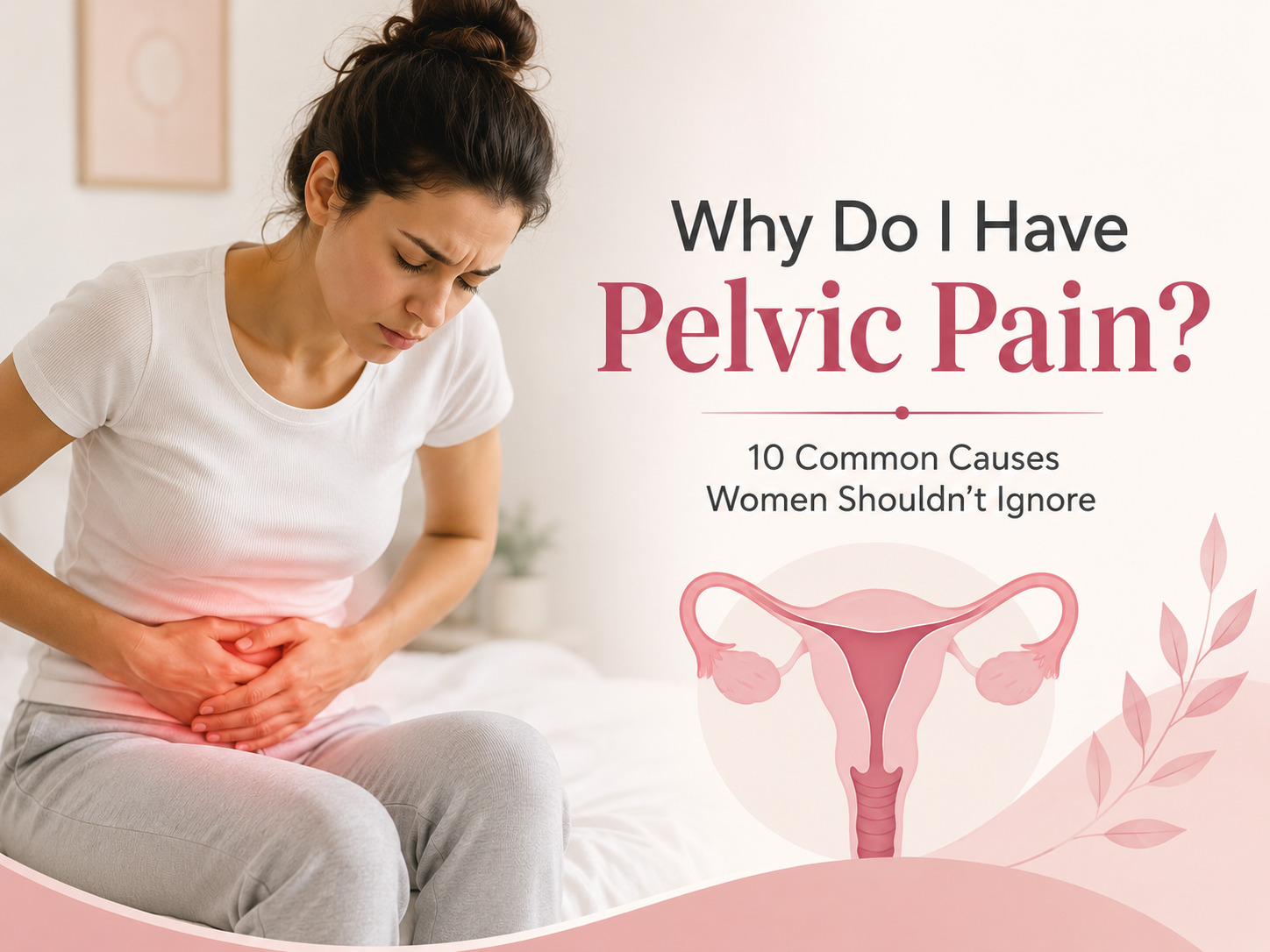
If you are wondering why do I have pelvic pain, there can be many possible answers. Pelvic pain in women can be linked to period problems, endometriosis, ovarian cysts, fibroids, adenomyosis, urinary infections, bowel conditions and pelvic inflammatory disease. In some cases, pelvic pain may also need urgent medical assessment.
Pelvic pain can feel different from woman to woman. It may be a sharp or stabbing pain, a dull ache, pressure, cramping or burning. It can happen constantly, come and go, occur around your period, or become noticeable when you exercise, urinate or have sex.
Understanding the possible causes can help you recognise when pelvic pain may need assessment by a GP or gynaecologist.
What Is Pelvic Pain?
Where is pelvic pain located?
Pelvic pain is generally felt in the lower part of the abdomen, below the belly button and around the pelvic area.
You may feel pain:
- In the centre of your lower abdomen
- On the left side
- On the right side
- Around the womb or ovaries
- In the lower back
- Around the bladder
- Around the bowel
- During or after your period
The location, timing and type of pain can provide useful clues about its possible cause.
Why Do I Have Pelvic Pain?
What causes pelvic pain in women?
There is no single cause of pelvic pain. The pelvis contains reproductive organs, the bladder, bowel, muscles and other structures, so problems affecting different parts of the body can cause similar symptoms.
Here are 10 common causes women should know about.
1. Period Pain
Can period pain cause pelvic pain?
Yes. Period pain is one of the most common causes of pelvic pain in women.
It happens when the womb contracts during menstruation. Some women experience mild cramps, while others have more significant pain that affects their everyday activities.
You may experience:
- Lower abdominal cramps
- Lower back pain
- Thigh pain
- Nausea
- Headaches
- Tiredness
However, severe or increasingly painful periods should not simply be accepted as normal. Conditions such as endometriosis, adenomyosis and fibroids can also cause painful periods.
When should I worry about period pain?
If period pain is becoming more severe, affecting your normal activities, or not improving with usual pain relief, speak with your GP.
2. Endometriosis
Can endometriosis cause pelvic pain?
Yes. Pelvic pain is one of the most recognised symptoms of endometriosis.
Endometriosis occurs when tissue similar to the lining of the womb grows outside the womb, commonly around the pelvis, ovaries, fallopian tubes or other pelvic structures.
Symptoms can include:
- Painful periods
- Pelvic pain
- Lower abdominal pain
- Pain during or after sex
- Pain when opening your bowels
- Pain when passing urine
- Heavy periods
- Fatigue
- Difficulty becoming pregnant
Symptoms can vary significantly. Some women have severe pain despite relatively little visible disease, while others may have extensive endometriosis with few symptoms.
Can endometriosis cause pelvic pain when I am not on my period?
Yes. Although symptoms may become worse around menstruation, endometriosis can also cause pelvic pain at other times during the menstrual cycle.
3. Ovarian Cysts
Can ovarian cysts cause pelvic pain?
Yes. Ovarian cysts can sometimes cause pelvic pain, particularly when a cyst becomes large, ruptures or causes another complication.
Pain may be:
- On one side of the pelvis
- Dull or aching
- Sudden and sharp
- Associated with abdominal pressure
Some ovarian cysts cause no symptoms and are discovered during an ultrasound scan for another reason.
When can an ovarian cyst become an emergency?
Sudden severe pelvic pain, particularly when accompanied by nausea or vomiting, requires urgent medical assessment because complications such as ovarian torsion or cyst rupture may need prompt treatment.
4. Adenomyosis
Can adenomyosis cause pelvic pain?
Yes. Adenomyosis is a condition in which tissue similar to the womb lining grows into the muscular wall of the womb.
It can cause:
- Painful periods
- Heavy periods
- Pelvic pain
- Bloating or a feeling of fullness
- Pain during sex
Adenomyosis can sometimes occur alongside other conditions, including endometriosis.
How do I know if pelvic pain could be adenomyosis?
Persistent pelvic or period pain accompanied by increasingly heavy or painful periods should be discussed with your GP. Further assessment may be recommended depending on your symptoms.
5. Uterine Fibroids
Can fibroids cause pelvic pain?
Yes. Fibroids are non-cancerous growths that develop in or around the womb.
Some women have no symptoms, while others may experience:
- Pelvic pressure
- Lower abdominal discomfort
- Heavy periods
- Longer periods
- Lower back pain
- Frequent urination
- Discomfort during sex
The symptoms can depend on the size and location of the fibroids.
Can fibroids cause pressure in the lower abdomen?
Yes. Larger fibroids can sometimes create a feeling of pressure or fullness in the lower abdomen or pelvis.
6. Pelvic Inflammatory Disease
Can an infection cause pelvic pain?
Yes. Pelvic inflammatory disease (PID) is an infection affecting the female reproductive organs and can cause pelvic or lower abdominal pain.
Other symptoms can include:
- Unusual vaginal discharge
- Pain during sex
- Bleeding between periods
- Bleeding after sex
- Pain when urinating
- Fever
Some cases of PID may have few symptoms, so persistent pelvic pain should be assessed rather than self-diagnosed.
Can an STI cause pelvic pain?
Some sexually transmitted infections can lead to PID and pelvic pain if they are not diagnosed and treated.
If pelvic pain occurs with unusual discharge, bleeding or urinary symptoms, medical or sexual-health assessment may be appropriate.
7. Urinary Tract Infection
Can a UTI cause pelvic pain?
Yes. A urinary tract infection can cause discomfort or pressure in the lower abdomen or pelvic area.
You may also notice:
- Burning when urinating
- Needing to urinate frequently
- A sudden urge to urinate
- Cloudy urine
- Blood in the urine
If you repeatedly experience urinary symptoms alongside pelvic pain, your GP may need to determine whether you have recurrent UTIs or another condition causing similar symptoms.
8. Irritable Bowel Syndrome
Can IBS cause pelvic pain?
Yes. IBS can cause abdominal and pelvic discomfort alongside digestive symptoms.
You may experience:
- Bloating
- Constipation
- Diarrhoea
- Abdominal cramps
- Changes in bowel habits
Because bowel symptoms and gynaecological symptoms can overlap, persistent pelvic pain may require a broader assessment.
Why does my pelvic pain improve after opening my bowels?
If pelvic discomfort changes after a bowel movement, a gastrointestinal cause such as constipation or IBS may be contributing. However, this does not rule out a gynaecological condition.
9. Ovulation Pain
Can ovulation cause pelvic pain?
Yes. Some women experience short-lived pelvic pain around ovulation.
Ovulation pain is sometimes called mittelschmerz and may occur approximately halfway through the menstrual cycle.
It may feel like:
- A mild ache
- A sharp twinge
- One-sided lower abdominal pain
It usually settles without treatment.
When should ovulation pain be checked?
If the pain is severe, persistent, happens frequently outside the expected ovulation period, or is accompanied by bleeding, fever, vomiting or other symptoms, seek medical advice.
10. Pelvic Floor Problems
Can pelvic floor muscles cause pelvic pain?
Yes. Pelvic floor muscles can become tight, weak or overactive, and this can contribute to pelvic pain.
Pelvic floor dysfunction may occur alongside conditions such as endometriosis, pelvic inflammatory disease, bladder problems or bowel disorders.
Symptoms may include:
- Pelvic pressure
- Pain during sex
- Difficulty relaxing the pelvic muscles
- Urinary symptoms
- Bowel symptoms
- Pain around the vagina or pelvic area
Depending on the cause, treatment may involve pelvic health physiotherapy or other specialist care.
Why Do I Have Pelvic Pain But No Period?
Can pelvic pain happen when you are not menstruating?
Yes. Pelvic pain does not always mean your period is about to start.
Possible causes include:
- Endometriosis
- Ovarian cysts
- Ovulation pain
- Fibroids
- Adenomyosis
- UTIs
- IBS
- Pelvic inflammatory disease
- Pelvic floor problems
- Pregnancy-related conditions
If pelvic pain keeps returning when you are not on your period, it is worth discussing with your GP.
Why Do I Have Pelvic Pain on One Side?
What causes pain on the left or right side of the pelvis?
One-sided pelvic pain can have several causes, including ovulation pain, ovarian cysts, bowel problems, urinary problems and other pelvic conditions.
The side of the pain alone cannot identify the cause.
Sudden severe one-sided pain should be assessed urgently, particularly if you also experience nausea, vomiting, dizziness, fainting or heavy bleeding.
Can Pelvic Pain Be a Sign of Pregnancy?
Can early pregnancy cause pelvic pain?
Mild pelvic discomfort can occur during pregnancy for several reasons, but pelvic pain during pregnancy should be assessed based on the circumstances and accompanying symptoms.
If you might be pregnant and have pelvic pain with unusual vaginal bleeding, seek urgent medical advice because an ectopic pregnancy needs to be ruled out.
When Should I Worry About Pelvic Pain?
When should I see a doctor for pelvic pain?
You should arrange a GP appointment if:
- Pelvic pain keeps returning
- The pain does not go away
- Your periods have become more painful
- Your periods have become heavier or irregular
- You experience persistent bloating
- You have unusual vaginal discharge
- You have bleeding between periods
- You have pain during sex
- You have difficulty becoming pregnant
- You have persistent bowel or urinary symptoms
The NHS recommends speaking with a GP for persistent or recurring pelvic pain and related symptoms.
When is pelvic pain an emergency?
Seek urgent medical help if pelvic pain is severe, rapidly worsening, or associated with fainting, dizziness, heavy vaginal bleeding, difficulty breathing, shoulder-tip pain or significant illness.
If you are pregnant or may be pregnant and have pelvic pain, urgent assessment may also be necessary.
How Is Pelvic Pain Diagnosed?
What happens when I see a doctor about pelvic pain?
Your doctor will usually ask detailed questions about your symptoms.
You may be asked:
- Where exactly is the pain?
- When did it begin?
- Is it constant or does it come and go?
- Is it related to your period?
- Does it happen during sex?
- Does urinating make it worse?
- Does opening your bowels affect it?
- Have your periods changed?
- Are you experiencing unusual discharge or bleeding?
- Could you be pregnant?
Keeping a symptom or pain diary before your appointment can be useful.
Depending on your symptoms, further assessment may include a physical or pelvic examination, urine or blood tests, swabs, or an ultrasound scan. Some women may need additional specialist investigations.
Can a Gynaecologist Help With Pelvic Pain?
When should I see a gynaecologist for pelvic pain?
A GP is often the first point of contact in the UK. If a gynaecological cause is suspected or your pelvic pain continues without a clear explanation, you may be referred to a gynaecologist.
A gynaecologist may investigate conditions such as:
- Endometriosis
- Adenomyosis
- Fibroids
- Ovarian cysts
- Pelvic inflammatory disease
- Chronic pelvic pain
- Menstrual disorders
The appropriate specialist depends on the suspected cause.
How Is Pelvic Pain Treated?
Can pelvic pain be treated?
Yes, but treatment depends on the underlying cause.
Possible treatments may include:
- Pain relief
- Antibiotics for certain infections
- Hormonal treatments
- Treatment for endometriosis
- Treatment for fibroids
- Management of ovarian cysts
- Pelvic health physiotherapy
- Treatment for bowel or urinary conditions
- Specialist procedures or surgery when appropriate
There is no single treatment that works for every woman because pelvic pain can have many different causes.
Frequently Asked Questions About Pelvic Pain
Why do I have pelvic pain?
Pelvic pain can be caused by period pain, endometriosis, ovarian cysts, adenomyosis, fibroids, pelvic inflammatory disease, UTIs, IBS, ovulation or pelvic floor problems. The cause can only be determined properly through an appropriate medical assessment.
Why do I have pelvic pain but no period?
Pelvic pain can happen outside menstruation because of conditions such as endometriosis, ovarian cysts, ovulation, fibroids, UTIs, IBS or pelvic floor problems.
Can endometriosis cause pelvic pain every day?
It can. Some women experience pain throughout their menstrual cycle rather than only during their period.
Can ovarian cysts cause pelvic pain?
Yes. Some ovarian cysts can cause pelvic pain, particularly when they become large or complications occur.
Can fibroids cause pelvic pain?
Yes. Fibroids can cause pelvic pressure, discomfort and sometimes pain, particularly depending on their size and location.
Can a UTI cause pelvic pain?
Yes. UTIs can cause lower abdominal or pelvic discomfort, usually alongside urinary symptoms such as burning or frequent urination.
Can IBS cause pelvic pain?
Yes. IBS can cause abdominal and pelvic discomfort, particularly alongside bloating, constipation or diarrhoea.
Is pelvic pain normal?
Mild, short-lived pelvic discomfort can have relatively common causes, but persistent, recurring, severe or unexplained pain should not simply be ignored.
When should I see a gynaecologist for pelvic pain?
Consider specialist assessment if your pelvic pain is persistent, recurrent, affecting your quality of life, associated with abnormal periods, or accompanied by symptoms suggesting a gynaecological condition.
What tests are used for pelvic pain?
Depending on your symptoms, your doctor may consider examination, urine or blood tests, swabs and ultrasound. Additional investigations may be recommended if a specific condition is suspected.
What Should I Do If My Pelvic Pain Keeps Coming Back?
Should recurrent pelvic pain be investigated?
Yes. Recurrent pelvic pain deserves proper assessment rather than repeated self-treatment.
Keeping a record of when your pain occurs can help your doctor identify patterns.
Record:
- The date and duration of pain
- Where the pain occurs
- How severe it feels
- Your menstrual-cycle stage
- Any bleeding or discharge
- Urinary symptoms
- Bowel symptoms
- Pain during sex
- Medicines you have taken
- Whether anything makes the pain better or worse
This information can make your consultation more useful.
Final Thoughts
If you have been asking “why do I have pelvic pain?”, there may be more than one possible explanation.
Period pain, endometriosis, ovarian cysts, adenomyosis, fibroids, pelvic inflammatory disease, UTIs, IBS, ovulation and pelvic floor problems can all cause pelvic or lower abdominal pain.
The most important point is not to assume that every type of pelvic pain is simply a normal part of being a woman.
If your pain is persistent, recurring, becoming more severe, affecting your daily activities, or occurring alongside abnormal bleeding, unusual discharge, urinary symptoms or changes to your periods, speak with your GP.
If a gynaecological condition is suspected, a gynaecologist can investigate the underlying cause and discuss appropriate treatment options.
Medical Disclaimer
This article is for general educational purposes only and does not replace professional medical advice, diagnosis or treatment. Pelvic pain has many possible causes. If your pain is severe, worsening, associated with fainting, heavy bleeding, difficulty breathing, fever, vomiting, or possible pregnancy, seek urgent medical assessment.