
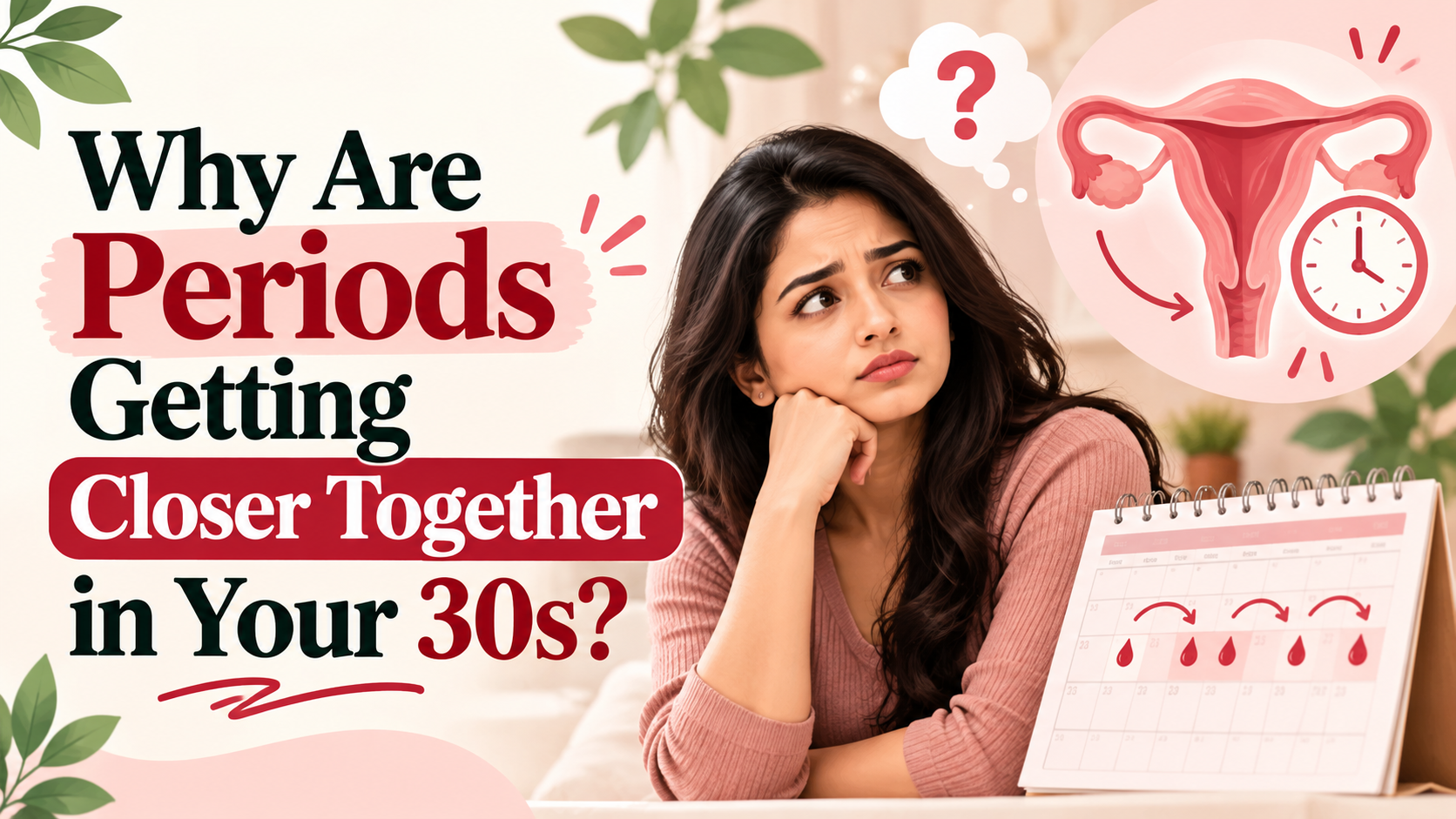
Periods getting closer together in your 30s usually happen because your cycle is shortening slightly as your ovarian reserve naturally declines, which is a normal part of ageing. In most cases this is simply your body changing gradually, though it can occasionally point to a hormonal imbalance, thyroid issue, or the early stages of perimenopause worth checking with your GP.
Why This Happens as You Get Older
Every woman is born with a set number of eggs, and as you move through your 30s, the number and quality of these eggs begin to decline. This shift often shortens the first half of your cycle, known as the follicular phase, which can mean your period arrives sooner than it used to, sometimes every 24 to 26 days instead of the more typical 28. This is a gradual, natural process for most women and is not usually a sign that something is wrong.
Other Reasons Cycles Can Shorten
While natural ageing is the most common cause, several other factors can also make your periods come closer together:
- Perimenopause. Even in your late 30s, hormone fluctuations linked to the lead up to menopause can start to shift cycle length and predictability.
- Thyroid changes. An overactive or underactive thyroid can directly affect how often you have a period.
- Stress and sleep changes. Significant stress, disrupted sleep, or major life changes can affect the hormones that regulate your cycle.
- Weight changes. Both weight loss and weight gain can influence hormone levels enough to shift cycle timing.
- Fibroids or polyps. These growths in the womb can sometimes cause more frequent or irregular bleeding that feels like periods coming closer together.
When It Is Simply a Normal Pattern
If your cycle has gradually shortened by a few days and everything else about your period, such as flow and pain, feels broadly the same, this is often just a normal part of getting older. Many women notice this shift happening steadily through their 30s without it affecting their overall health or fertility in any concerning way. You can read further general information on how the menstrual cycle changes with age here: additional reading.
When It Is Worth Getting Checked
- Your cycle has become noticeably shorter in a short space of time, rather than gradually
- Periods are also heavier, more painful, or accompanied by unusual bleeding between periods
- You are trying to conceive and are concerned about your cycle changes
- You are experiencing other symptoms such as hot flushes, mood changes, or disrupted sleep alongside the shorter cycle
- The change is sudden and paired with fatigue, weight change, or other symptoms that could suggest a thyroid issue
Frequently Asked Questions
Is it normal for my cycle to shorten by a few days as I get older? Yes, a gradual shortening of a few days is common through your 30s and is usually linked to natural changes in ovarian reserve.
Could shorter cycles mean I am approaching menopause early? It is possible, particularly if paired with other symptoms like hot flushes or mood changes, but shorter cycles alone are not a reliable sign of early menopause on their own.
Does a shorter cycle mean I am less fertile? Not necessarily. Cycle length alone does not determine fertility, though very short cycles can sometimes suggest ovulation is happening earlier or less predictably.
Should I track my cycle if it feels like it is changing? Yes, tracking your cycle length and any other symptoms for a few months gives you and your doctor useful information if the pattern needs investigating.
When should I see a gynaecologist about this change? If the change is sudden, paired with heavier or more painful periods, or you are also experiencing other symptoms, it is worth booking an appointment rather than assuming it will settle on its own.
Conclusion
Periods getting closer together in your 30s is often simply a natural sign of your body changing with age, but it is not something you need to figure out alone. If the pattern feels unusual, sudden, or comes with other symptoms, contact our team at Northwest Gynaecology for a proper assessment and peace of mind.