
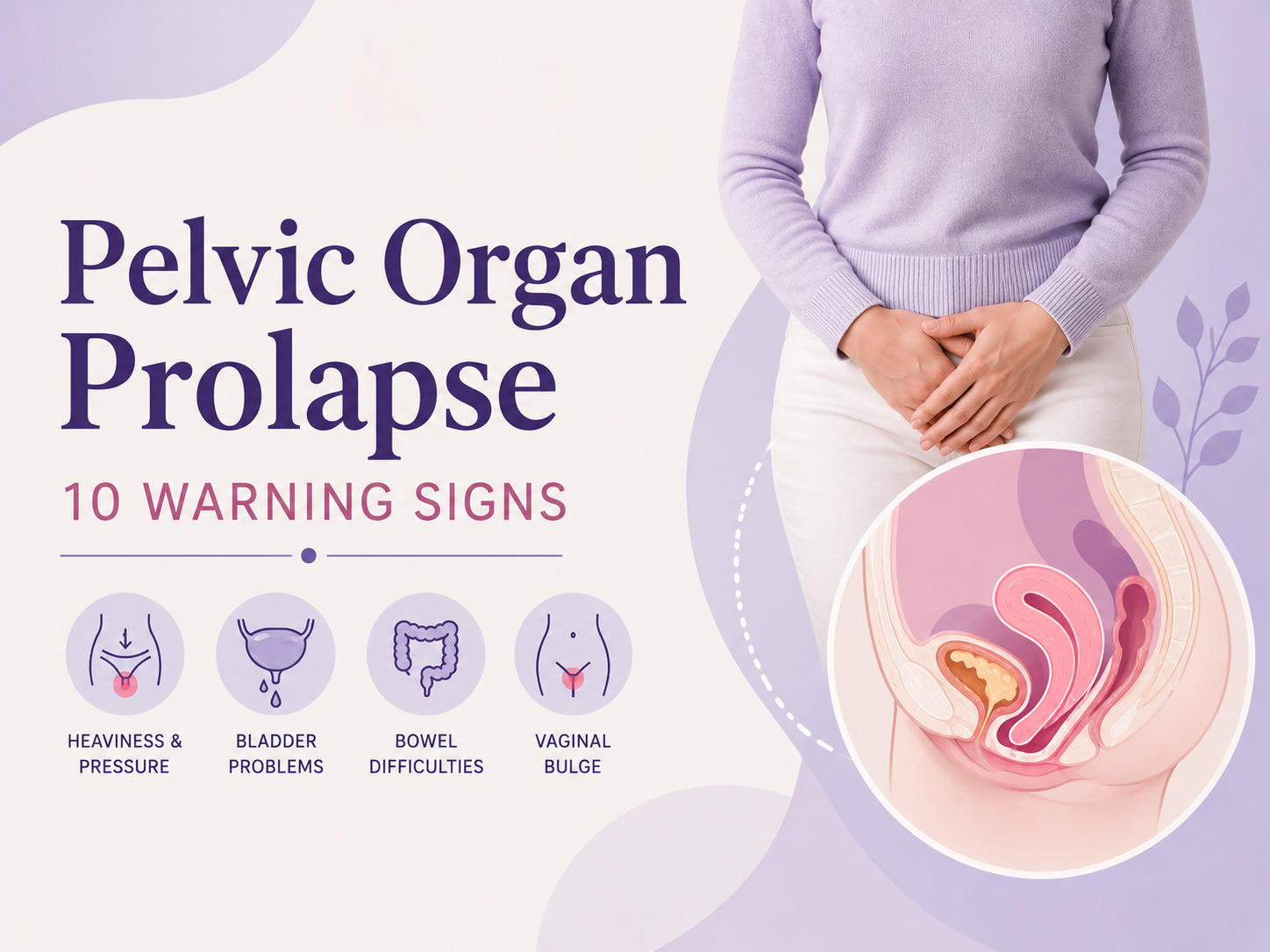
Have you ever felt a heavy or dragging feeling in your vagina? Do you sometimes feel a small bulge or notice that your bladder is not emptying properly?
These can be signs of pelvic organ prolapse.
Pelvic organ prolapse happens when one or more organs in the pelvis move down from their usual position and push into the vagina. This can involve the womb, bladder, or bowel.
It can happen after pregnancy and childbirth, with ageing, after menopause, or when the pelvic floor becomes weak.
The good news is that pelvic organ prolapse can often be managed. Not every woman needs surgery.
Could These Changes Be a Sign of Prolapse?
The symptoms of prolapse can be easy to miss at first.
You may think the feeling is caused by getting older, having children, constipation, or simply being tired.
But some changes are worth checking.
1. You Feel a Bulge in Your Vagina
Can pelvic organ prolapse cause a vaginal bulge?
Yes.
One of the clearest signs is feeling or seeing a lump or bulge inside the vagina.
You may notice it when:
- Having a shower
- Using the toilet
- Standing for a long time
- Exercising
- Lifting something heavy
In some women, the bulge may become more noticeable towards the end of the day.
It may feel like something is coming down.
If you notice a new vaginal bulge, arrange an appointment with your GP.
2. There Is a Heavy or Dragging Feeling
What does a prolapse feel like?
Many women describe prolapse as a feeling of heaviness, pressure, or dragging in the vagina or lower tummy.
It may feel as though something is pulling down.
The feeling can become stronger after standing or being active for a long time.
You may feel better after sitting or lying down.
This type of pressure is one of the common pelvic organ prolapse symptoms women notice.
3. Your Bladder Does Not Feel Empty
Can prolapse cause bladder problems?
Yes.
If the bladder moves down towards the vagina, it can sometimes affect how you pass urine.
You may feel that your bladder has not completely emptied after going to the toilet.
You might need to wait longer or try again shortly afterwards.
Some women also need to urinate more often than before.
If you notice a change in your normal bladder habits, tell your GP.
4. You Leak Urine When You Cough or Sneeze
Can prolapse cause urine leakage?
It can.
Some women with pelvic organ prolapse also experience urinary leakage.
You may leak a small amount of urine when you:
- Cough
- Sneeze
- Laugh
- Exercise
- Lift something
- Get up quickly
Urine leakage can also happen without a prolapse.
So this symptom alone does not confirm that you have one.
A healthcare professional can check whether the problem is related to your pelvic floor, bladder, or another cause.
5. Going to the Toilet Becomes Difficult
Can pelvic organ prolapse make it hard to poo?
Yes.
A prolapse involving the back wall of the vagina can sometimes affect bowel movements.
You may feel:
- Constipated
- Unable to empty your bowel fully
- Pressure around the back passage
- Like you need to strain more than before
Some women feel that they still need to go even after using the toilet.
Long-term constipation and straining can also put extra pressure on the pelvic floor.
Managing constipation is therefore an important part of looking after pelvic floor health.
6. Sex Feels Different or Uncomfortable
Can prolapse cause pain during sex?
Yes, it can.
Some women notice pressure, discomfort, or a feeling that something is in the way during sex.
You may also feel less comfortable in certain positions.
A prolapse does not mean that you cannot have sex.
However, if sex has become painful or uncomfortable, it is worth discussing it with your GP or gynaecologist.
There may be ways to improve the symptoms.
7. You Have Lower Back or Pelvic Discomfort
Can prolapse cause back pain?
Some women experience lower back, pelvic, or vaginal discomfort with prolapse.
The feeling may be more noticeable after standing or walking for a long time.
However, back pain has many possible causes.
So back pain by itself does not mean you have a prolapse.
If it happens together with a vaginal bulge, pressure, bladder problems, or bowel problems, tell your doctor about the full pattern.
8. Symptoms Become Worse After Standing
Why does my prolapse feel worse at the end of the day?
This can happen because being upright for a long time may increase pressure on the pelvic floor.
You may notice that your symptoms are:
- Mild in the morning
- Worse after a busy day
- Stronger after standing
- More noticeable after lifting
- Better when lying down
This pattern can be a useful clue for your healthcare professional.
Keeping a simple symptom diary can help you notice when your symptoms are strongest.
9. You Feel Pressure When Exercising
Can exercise make a prolapse feel worse?
Some activities can increase pressure on the pelvic floor.
You may notice symptoms more during activities such as heavy lifting or high-impact exercise.
This does not mean that you should stop all exercise.
Gentle activities such as walking can still be helpful.
A women’s health physiotherapist can also help you understand which exercises are suitable for your situation.
10. A Prolapse Is Affecting Your Daily Life
When does a prolapse become a problem?
A prolapse can be mild and cause very little trouble.
For another woman, the same condition may have a much bigger effect.
You may find yourself changing your routine because of:
- Pelvic pressure
- Urine leakage
- Constipation
- A vaginal bulge
- Discomfort during sex
- Difficulty exercising
- Fear of lifting things
If symptoms are affecting your normal life, you do not have to simply put up with them.
Treatment and support are available.
Why Does Pelvic Organ Prolapse Happen?
What can weaken the pelvic floor?
The pelvic floor is made up of muscles and tissues that help support the organs in your pelvis.
These muscles can become weaker or stretched for several reasons.
Common factors include:
- Pregnancy
- Childbirth
- Getting older
- Menopause
- Long-term constipation
- Repeated heavy lifting
- Being overweight
- Long-term coughing
- Previous pelvic surgery
Having one of these risk factors does not mean you will definitely develop a prolapse.
Can Pelvic Organ Prolapse Happen After Childbirth?
Is prolapse common after having a baby?
Pregnancy and childbirth can put a lot of pressure on the pelvic floor.
This can increase the chance of developing a prolapse.
The risk may be affected by factors such as the type of birth, the number of pregnancies, and the strength of the pelvic floor.
However, prolapse can also happen to women who have never had children.
Can Prolapse Happen After Menopause?
Does menopause increase the risk of prolapse?
The risk of pelvic organ prolapse can increase with age, particularly after menopause.
Changes in hormone levels can affect the tissues that support the pelvic organs.
If you notice a new vaginal bulge or pressure after menopause, speak with your GP.
Is Pelvic Organ Prolapse Dangerous?
Should I be worried about a prolapse?
Most pelvic organ prolapses are not life-threatening.
A mild prolapse may not need treatment at all.
The main concern is usually how much it affects your quality of life.
However, significant bladder or bowel problems should be assessed.
A healthcare professional can also check the severity of the prolapse and discuss the best options.
Can a Prolapse Get Worse?
Does pelvic organ prolapse always become worse?
No.
A prolapse does not always get worse.
Some women have mild symptoms that remain stable.
Others may notice changes over time.
Factors such as constipation, heavy lifting, chronic coughing, and pressure on the pelvic floor can affect symptoms.
Getting advice early can help you understand how to manage the condition.
Can a Prolapse Go Away on Its Own?
Will pelvic organ prolapse disappear without treatment?
A mild prolapse may cause little or no trouble and may simply be monitored.
However, you should not rely on it disappearing by itself.
If you have symptoms, your doctor can explain whether monitoring, pelvic floor exercises, a pessary, or another treatment may help.
Can Pelvic Floor Exercises Help?
Do pelvic floor exercises improve prolapse?
Yes, pelvic floor muscle training can help some women with symptomatic prolapse, particularly in milder cases.
The exercises strengthen the muscles that support the pelvic organs.
It is often helpful to learn the exercises correctly from a specialist women’s health physiotherapist.
Doing the exercises regularly is important.
Pelvic floor exercises may improve symptoms, but they do not always completely remove a prolapse.
Can Lifestyle Changes Help?
What can I do to reduce prolapse symptoms?
Some everyday changes may help reduce pressure on the pelvic floor.
You can discuss the following with your healthcare professional:
- Treating constipation
- Avoiding repeated heavy lifting
- Maintaining a healthy weight
- Managing a long-term cough
- Stopping smoking if you smoke
- Doing suitable pelvic floor exercises
- Choosing lower-impact exercise when needed
The right changes depend on your symptoms and general health.
Can a Pessary Treat Pelvic Organ Prolapse?
What is a vaginal pessary?
A pessary is a small device placed inside the vagina to help support the pelvic organs.
It can be made from silicone or another suitable medical material.
A pessary can be an option for women who:
- Do not want surgery
- Are not ready for surgery
- Want to manage symptoms during a particular stage of life
- May want to have children in the future
- Have health reasons that make surgery less suitable
A healthcare professional needs to choose and fit the right type and size.
Does Pelvic Organ Prolapse Need Surgery?
Will I need an operation?
Not necessarily.
Many women manage prolapse without surgery.
Treatment may include:
- Monitoring
- Pelvic floor muscle training
- Lifestyle changes
- A vaginal pessary
- Vaginal hormone treatment in some women
- Surgery when appropriate
Surgery may be considered when symptoms are severe or when other treatments have not helped enough.
The decision should be based on your symptoms, health, future pregnancy plans, and personal preference.
How Is Pelvic Organ Prolapse Diagnosed?
What happens when I see a doctor?
Your GP will ask about your symptoms and how they affect your daily life.
You may then have a pelvic examination.
The doctor may look for a vaginal bulge and assess where the prolapse is located.
You may be asked to change position during the examination so the doctor can get a better idea of the prolapse.
If you have bladder symptoms, additional tests may sometimes be needed.
The severity of a prolapse can also be graded.
When Should I See a Gynaecologist?
What symptoms should I get checked?
Speak with your GP if you notice:
- A lump or bulge in your vagina
- A feeling that something is coming down
- Pelvic pressure or heaviness
- Difficulty emptying your bladder
- Urine leakage
- Difficulty emptying your bowel
- Ongoing constipation
- Pain or discomfort during sex
- Symptoms that are affecting your everyday life
Your GP may manage the problem or refer you to a gynaecologist, pelvic health physiotherapist, or another specialist depending on your symptoms.
Frequently Asked Questions
How do I know if I have a prolapse?
A feeling of pressure, heaviness, dragging, or a lump or bulge in the vagina can be a sign. Bladder and bowel changes can also happen. A medical examination is needed to confirm a prolapse.
What does pelvic organ prolapse feel like?
It can feel like something is coming down, a vaginal bulge, heaviness, pressure, or dragging in the pelvis. Some women have no symptoms.
Can pelvic organ prolapse cause a bulge?
Yes. You may feel or see a bulge inside the vagina or, in some cases, near the vaginal opening.
Can prolapse cause pressure in the vagina?
Yes. Pressure, heaviness, and a dragging sensation are common symptoms.
Can prolapse cause urine leakage?
Yes. Some women experience urine leakage, especially when coughing, sneezing, exercising, or lifting.
Can prolapse cause constipation?
Yes. Some types of prolapse can make it harder to empty the bowel properly.
Can prolapse happen after childbirth?
Yes. Pregnancy and childbirth can put significant strain on the pelvic floor and increase the risk of prolapse.
Can prolapse happen after menopause?
Yes. The risk can increase with age and after menopause.
Can pelvic organ prolapse get worse?
It can, but it does not always get worse. Some mild prolapses remain stable or cause very few symptoms.
Is pelvic organ prolapse dangerous?
Most prolapses are not life-threatening. However, bladder, bowel, or significant vaginal symptoms should be assessed.
Can a prolapse go away on its own?
A mild prolapse may not need treatment and can sometimes remain stable. If you have symptoms, speak with a healthcare professional about your options.
Can pelvic floor exercises help prolapse?
Yes. Supervised pelvic floor muscle training can improve symptoms, especially with milder prolapse.
Can a pessary treat pelvic organ prolapse?
Yes. A vaginal pessary can support the pelvic organs and reduce symptoms for some women.
Does pelvic organ prolapse need surgery?
No. Many women manage prolapse with pelvic floor exercises, lifestyle changes, monitoring, or a pessary. Surgery may be considered when symptoms are severe or other options have not helped.
When should I see a gynaecologist for prolapse?
See your GP if you notice a vaginal bulge, pelvic pressure, bladder or bowel problems, or symptoms that affect your daily life. A gynaecologist may be involved if specialist treatment is needed.
Final Thoughts
Pelvic organ prolapse can sound worrying when you first hear the term.
But having a prolapse does not mean you have to live with constant discomfort or that you will automatically need surgery.
The first step is recognising the signs.
A vaginal bulge, pelvic pressure, bladder problems, constipation, urine leakage, or discomfort during sex can all be reasons to get checked.
Pregnancy, childbirth, ageing, menopause, constipation, heavy lifting, and other factors can put extra strain on the pelvic floor.
If you think you may have a prolapse, speak with your GP.
With the right assessment, you can understand what is happening and choose a treatment approach that fits your symptoms and your life.
Medical Disclaimer
This article is for general educational purposes only. It does not replace an examination, diagnosis, or personalised medical advice. If you have a new vaginal bulge, significant bladder or bowel problems, bleeding, severe pain, or symptoms that are getting worse, speak with a qualified healthcare professional.