
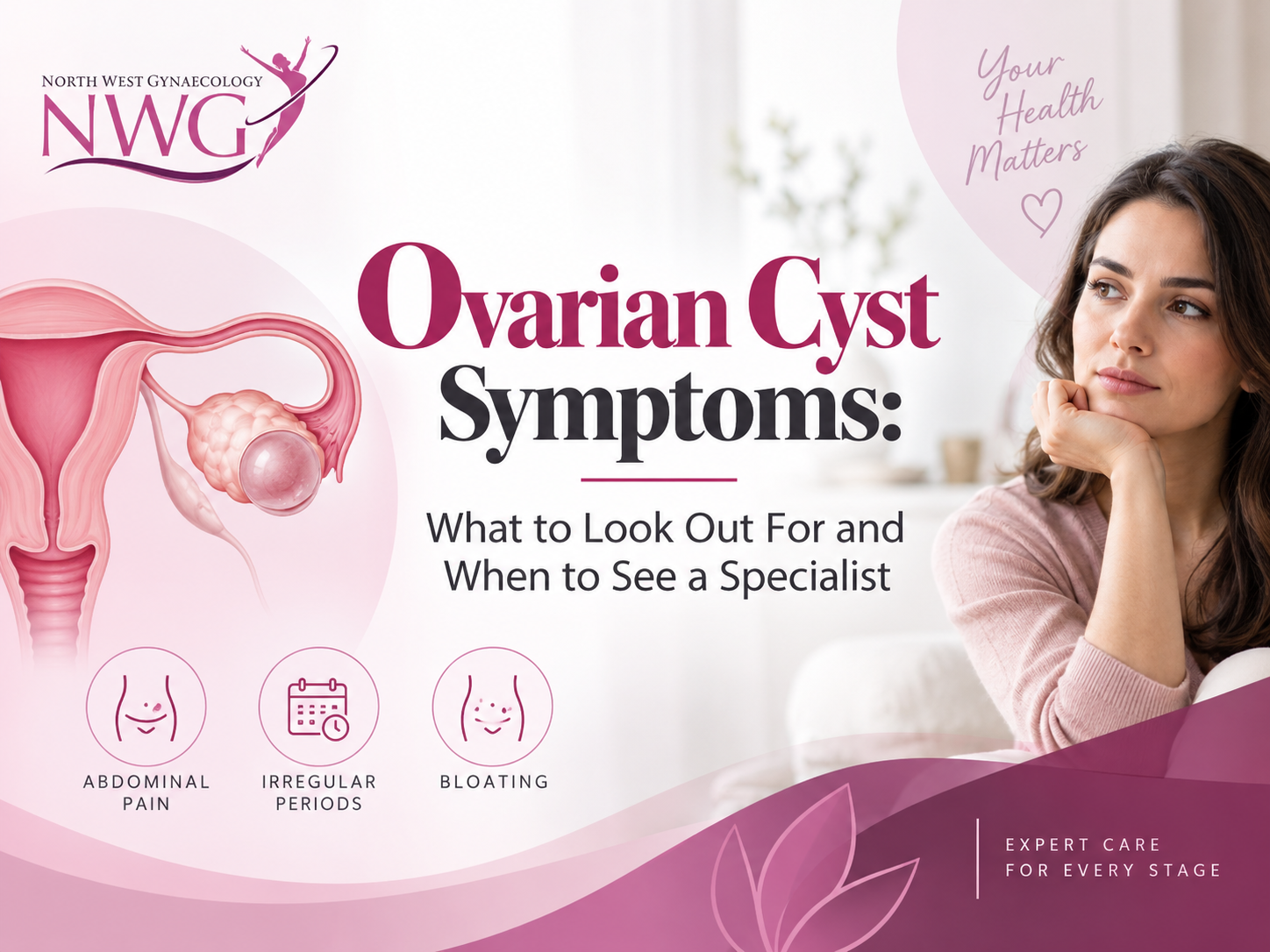
What Is an Ovarian Cyst?
An ovarian cyst is a fluid filled sac that forms on or inside an ovary. Most cysts develop naturally as part of the menstrual cycle and disappear on their own within a few months. Ovarian cyst symptoms only appear in some cases, which is why many cysts are found by chance during a routine scan.
Common Ovarian Cyst Symptoms
Not every cyst causes noticeable ovarian cyst symptoms. When symptoms do occur, they can include:
- Dull or sharp pain in the lower abdomen or pelvis
- Bloating or a feeling of fullness
- Pain during sex
- Irregular periods or unusual bleeding
- Needing to urinate more often
- Discomfort during bowel movements
These ovarian cyst symptoms can be mild and easy to dismiss, which is one reason regular check ups matter.
Symptoms of a Larger or Ruptured Cyst
Some ovarian cyst symptoms are more serious and need urgent attention. These include:
- Sudden, severe abdominal or pelvic pain
- Pain alongside fever or vomiting
- Rapid breathing or feeling faint
- Sudden, sharp pain following vigorous exercise or sex
If you experience these ovarian cyst symptoms suddenly, you should seek medical help promptly, as they can indicate a rupture or twisting of the ovary.
Ovarian Cyst Symptoms by Type
Different types of ovarian cysts can present slightly different ovarian cyst symptoms. The table below gives a simple overview.
| Cyst Type | Typical Symptoms | Usual Outcome |
|---|---|---|
| Functional cyst | Often no symptoms, mild bloating | Usually resolves on its own |
| Dermoid cyst | Pelvic discomfort, pressure | May need monitoring or removal |
| Endometrioma | Painful periods, pelvic pain | Often linked to endometriosis |
| Cystadenoma | Bloating, pressure if large | May require surgical review |
What Causes Ovarian Cysts?
Most ovarian cysts are simply part of a normal menstrual cycle. Other causes of ovarian cysts and their related symptoms include:
- Hormonal imbalances
- Endometriosis
- Pregnancy
- Severe pelvic infections
- Polycystic ovary syndrome
How Are Ovarian Cyst Symptoms Diagnosed?
If you report ovarian cyst symptoms, a consultant will usually recommend the following steps.
- A detailed discussion of your symptoms and cycle history
- A pelvic examination, if appropriate
- An ultrasound scan to view the ovaries clearly
- Blood tests in some cases, to rule out other causes
Many ovarian cyst symptoms can be fully assessed in a single visit, especially when on site scanning is available.
Treatment Options for Ovarian Cysts
Treatment depends on the size of the cyst, your symptoms, and your overall health. Options can include:
- Watchful waiting with a follow up scan
- Pain relief and symptom management
- Hormonal treatment to prevent new cysts
- Minor surgery to remove the cyst, if needed
Can Ovarian Cysts and Their Symptoms Come Back?
Yes, it is common for new cysts to form after an old one resolves, especially if your ovarian cyst symptoms are linked to your natural menstrual cycle. This does not usually mean anything is wrong. However, if ovarian cyst symptoms keep returning, or become more frequent, it is worth discussing long term management with a specialist.
Some women benefit from hormonal treatment to reduce the chance of new cysts forming, while others simply need periodic scans to keep an eye on things. Your consultant can help you decide which approach suits your ovarian cyst symptoms and overall health.
When Should You See a Specialist About Ovarian Cyst Symptoms?
You should book an appointment if you notice ovarian cyst symptoms that are persistent, worsening, or affecting daily life. Seek urgent care if you experience sudden, severe pain, fever, or feel faint alongside your symptoms.
At North West Gynaecology, our consultants specialise in diagnosing and treating ovarian cysts, and profiles for each consultant are available on our consultants page.
How to Book an Appointment
If you are concerned about ovarian cyst symptoms, get in touch through our contact page. Our team can usually arrange an appointment, including a scan, within a few days.
Frequently Asked Questions
1. Are ovarian cyst symptoms always noticeable?
No. Many ovarian cysts cause no symptoms at all and are found during a routine scan for another reason.
2. Can ovarian cyst symptoms come and go?
Yes. Mild ovarian cyst symptoms such as bloating or pelvic discomfort can vary through your menstrual cycle.
3. When are ovarian cyst symptoms an emergency?
Sudden, severe pain, fever, vomiting, or feeling faint alongside ovarian cyst symptoms should be treated as a medical emergency.
4. Do ovarian cyst symptoms mean I need surgery?
Not usually. Most ovarian cysts and their symptoms resolve on their own or with monitoring, and only some cases require surgery.
5. Can ovarian cyst symptoms affect fertility?
In most cases, ovarian cysts do not affect fertility, although some underlying causes, such as endometriosis, may need separate assessment.
Quick Self-Check: Should You Get Your Symptoms Checked?
Review the questions below. If you answer yes to two or more, it is worth booking a check up.
- Have you noticed ongoing pelvic pain or pressure?
- Is your bloating persistent rather than occasional?
- Have your periods become more irregular recently?
- Do you feel discomfort during sex or bowel movements?
- Are you due, or overdue, for a routine gynaecology check up?
Conclusion
Ovarian cyst symptoms range from completely unnoticeable to sudden and severe, which is why professional assessment matters. If you are experiencing any of the ovarian cyst symptoms covered here, contact North West Gynaecology to arrange a consultation and, where needed, a same day scan. Getting your ovarian cyst symptoms checked early usually means a quicker, clearer path to feeling better.
Source for general NHS guidance on ovarian cysts: NHS.uk