
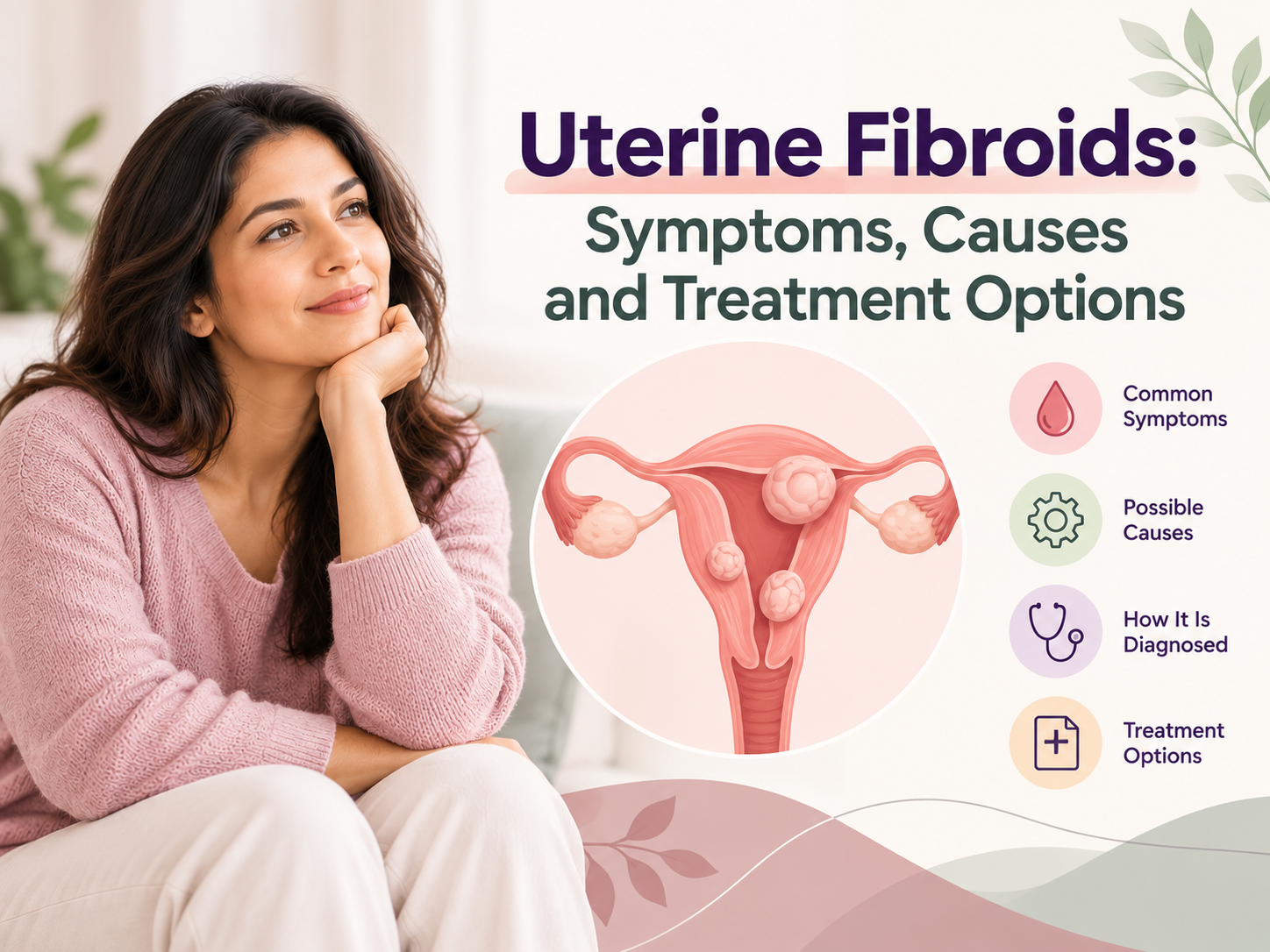
Understanding the signs of uterine fibroids can help you recognise when to seek medical advice and which treatment options may be suitable.
What Are Uterine Fibroids?
Uterine fibroids are growths made up of muscle and tissue that develop in or around the womb. They can vary in size, from very small growths to larger masses that change the shape of the womb.
Fibroids are not cancerous, and having them does not mean you have womb cancer. They mainly affect women who have not been through menopause.
Some fibroids remain small and cause no problems. Others can lead to heavy menstrual bleeding, pain or pressure on nearby organs.
Common Uterine Fibroids Symptoms to Look Out For
Not every woman with fibroids experiences symptoms. When symptoms do occur, they often depend on the size, number and position of the growths.
1. Heavy or prolonged periods
Heavy menstrual bleeding is one of the most common signs of uterine fibroids.
You may notice that your periods:
-
Last longer than usual.
-
Involve passing large blood clots.
-
Require you to change sanitary products more frequently.
-
Interfere with your daily activities.
-
Leave you feeling tired or weak.
Heavy bleeding can sometimes lead to iron deficiency anaemia, which may cause fatigue, dizziness and breathlessness.
2. Painful periods and pelvic discomfort
Fibroids can cause period pain that feels stronger than your usual menstrual cramps. You may also experience aching or discomfort in your lower abdomen.
Persistent or worsening pelvic pain should be assessed by a healthcare professional, as other conditions can cause similar symptoms.
3. Pressure or heaviness in the lower abdomen
Larger fibroids may make your lower abdomen feel heavy, full or swollen.
Some women describe a feeling of pressure in the pelvic area. You may also notice that your clothes feel tighter around your waist, even without significant weight gain.
4. Frequent urination
Fibroids can press against the bladder, reducing the space available for it to fill.
As a result, you may need to urinate more often or feel a sudden urge to go. Large fibroids can sometimes make it difficult to empty your bladder fully.
5. Lower back pain
Fibroids may cause aching in the lower back, particularly when they are large or positioned towards the back of the womb.
However, back pain has many possible causes. It should not automatically be attributed to fibroids without an appropriate assessment.
6. Constipation or discomfort when passing stools
A fibroid that presses against the bowel or rectum may cause constipation, bloating or discomfort when passing stools.
These symptoms can also occur with digestive conditions, so a clinician may need to investigate the underlying cause.
7. Pain during sex
Some women experience discomfort or pain during sexual intercourse, depending on the location and size of their fibroids.
If pain during sex is new, persistent or affecting your quality of life, arrange a medical assessment.
8. Difficulty getting pregnant
Some fibroids can affect fertility, particularly when they change the shape of the inside of the womb. However, many women with fibroids become pregnant and have healthy pregnancies.
The effect on fertility depends on the fibroid’s location, size and other individual factors.
What Causes Uterine Fibroids?
The exact cause of uterine fibroids is not fully understood. However, hormones and genetic factors appear to play a role in their development.
Several factors are associated with a higher likelihood of developing fibroids:
-
Hormonal influences: Oestrogen and progesterone are involved in the growth of fibroids.
-
Family history: You may have a higher likelihood of developing fibroids if a close relative has them.
-
Age: Fibroids are more common during the reproductive years.
-
Body weight: Being overweight or living with obesity is associated with an increased risk.
-
Certain health factors: High blood pressure and diabetes are also associated with fibroids.
Having one or more of these risk factors does not mean you will necessarily develop fibroids.
How Are Uterine Fibroids Diagnosed?
If you have symptoms that suggest fibroids, a GP or gynaecologist can assess your medical history and recommend appropriate investigations.
Medical history and examination
Your clinician may ask about your periods, bleeding patterns, pelvic pain, urinary symptoms and any plans for pregnancy.
Depending on your symptoms, they may also recommend an abdominal or pelvic examination.
Ultrasound scan
An ultrasound scan is commonly used to identify fibroids and assess their size, number and location.
Depending on your symptoms and the initial findings, you may need further investigations, such as an MRI scan or hysteroscopy. Blood tests may also be recommended if heavy bleeding raises concerns about anaemia.
Which Treatments Can Help Uterine Fibroids?
Treatment depends on your symptoms, the size and location of the fibroids, your general health and whether you want to become pregnant. Fibroids that cause no problems may not need treatment.
Monitoring without immediate treatment
If your fibroids are small and do not cause symptoms, your clinician may recommend monitoring them rather than treating them straight away.
Medicines to manage symptoms
Medicines may help control heavy bleeding and period pain, although they do not all remove fibroids.
Options may include:
-
Tranexamic acid to reduce heavy menstrual bleeding.
-
Anti-inflammatory painkillers to help with pain and cramps.
-
Hormonal treatments to manage bleeding.
-
Selected specialist medicines that help reduce fibroid-related symptoms.
The most suitable option depends on your medical history and the type of fibroids you have.
Uterine artery embolisation
Uterine artery embolisation is a procedure that blocks the blood supply to fibroids, causing them to shrink over time.
It may be suitable for some women who want to avoid major surgery. Its suitability and possible effects on future pregnancy should be discussed with a specialist.
Myomectomy
A myomectomy is an operation to remove fibroids while keeping the womb in place.
It may be considered when symptoms are significant or fibroids affect fertility. However, fibroids can grow again after treatment.
Hysterectomy
A hysterectomy involves removing the womb. It is a permanent treatment for uterine fibroids because fibroids cannot grow in a womb that has been removed.
It is major surgery and means you will no longer be able to carry a pregnancy. Your specialist should discuss the benefits, risks and alternatives with you before you make a decision.
When Should You See a Gynaecologist?
Arrange an appointment with a GP or gynaecologist if you experience:
-
Heavy or prolonged periods.
-
Persistent pelvic pain or pressure.
-
Frequent urination or difficulty emptying your bladder.
-
Pain during sex.
-
Bleeding that affects your daily life.
-
Symptoms that continue despite treatment.
Seek urgent medical attention if you develop sudden, severe pelvic or abdominal pain, particularly if you also feel faint, have heavy bleeding or feel very unwell.
Do not assume that every episode of heavy bleeding or pelvic pain is caused by fibroids. Other conditions may need different treatment.
Frequently Asked Questions
Can uterine fibroids go away on their own?
Some fibroids shrink naturally, particularly after menopause when hormone levels decline. However, this does not happen to every woman, and symptoms may need treatment before then.
Are uterine fibroids cancerous?
Most uterine fibroids are benign, meaning they are not cancerous. A new or unusual pelvic mass still needs proper medical assessment to establish what it is.
Can you get pregnant if you have uterine fibroids?
Yes. Many women with fibroids become pregnant naturally. Some fibroids, especially those that affect the inside of the womb, may make conception more difficult or increase certain pregnancy risks. Your clinician can assess your individual situation.
Do uterine fibroids always cause heavy periods?
No. Some women experience heavy bleeding, while others have pelvic pressure, urinary symptoms or no symptoms at all.
Can fibroids grow after menopause?
Fibroids often shrink after menopause, but this is not guaranteed. New symptoms, a growing abdominal mass or postmenopausal bleeding should always be assessed by a healthcare professional.
Is surgery always necessary for uterine fibroids?
No. Many women do not need surgery. Monitoring, medication and procedures such as uterine artery embolisation may be suitable alternatives, depending on the individual circumstances.
Final Thoughts
Uterine fibroids symptoms can affect your periods, pelvic comfort, bladder and bowel habits. Although fibroids are usually non-cancerous, symptoms such as heavy bleeding and persistent pain should not be ignored.
An assessment with a qualified healthcare professional can help confirm the diagnosis and identify the most suitable treatment for your needs, including your future pregnancy plans.
Medical disclaimer: This article is for general information only and does not replace medical advice, diagnosis or treatment from a qualified healthcare professional.