
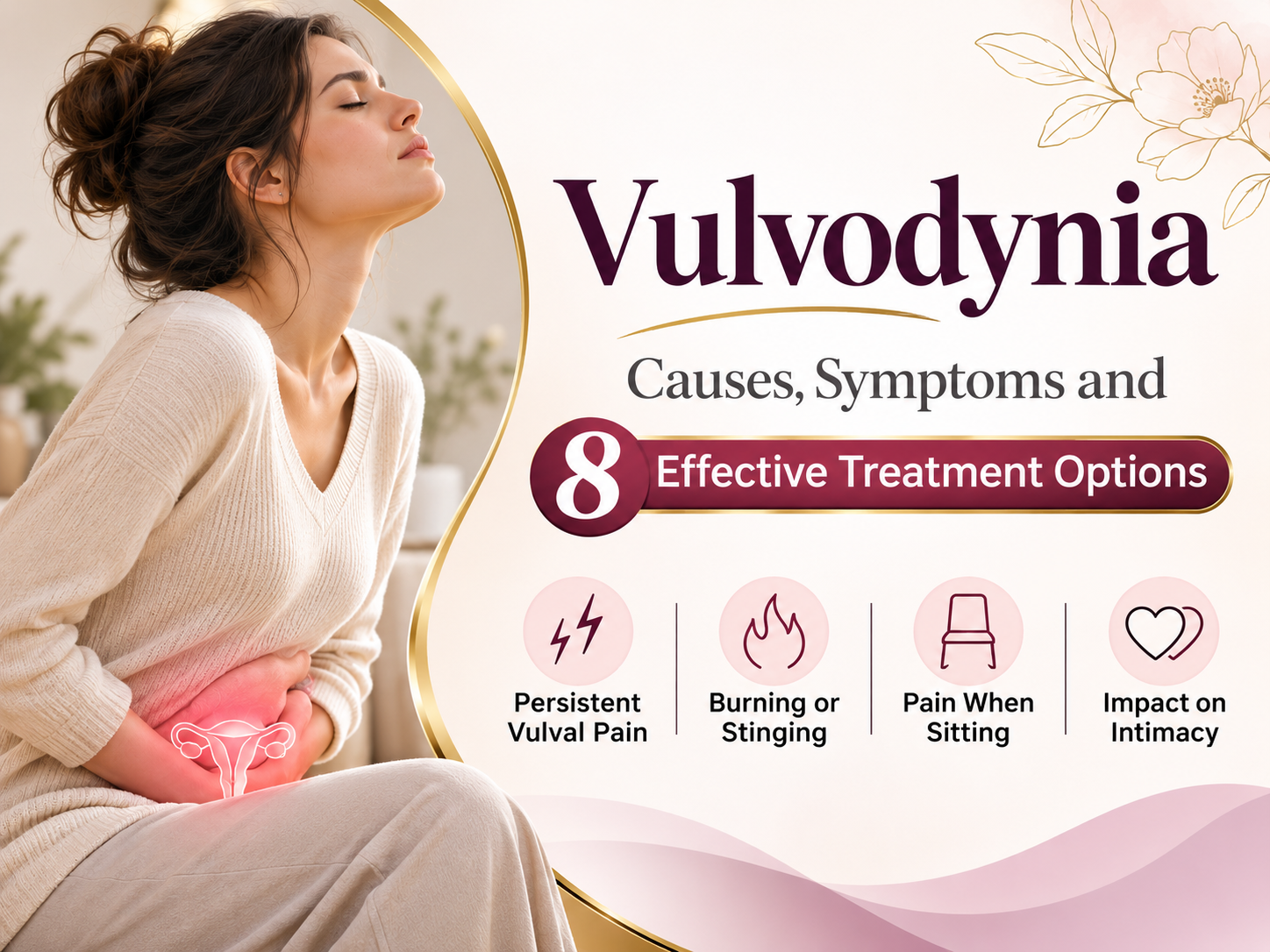
Vulvodynia is long-term pain in or around the vulva that lasts for at least three months and has no clear medical cause. The pain may feel like burning, itching, stinging, soreness or sharp discomfort.
The vulva is the external part of the female genital area. It includes the outer and inner lips, the clitoris and the opening of the vagina.
Vulvodynia can affect women of different ages. The pain may happen all the time or only when the area is touched.
It can affect everyday activities, including:
- Sitting for long periods.
- Walking or exercising.
- Wearing tight clothes.
- Using tampons.
- Having sex.
- Having a gynaecological examination.
Important: Vulvodynia is not the same as a vaginal infection. The vulva may look normal even when the pain is severe.
How Common Is Vulvodynia?
Vulvodynia is more common than many people realise, but its exact frequency is difficult to measure.
Research and clinical guidance report different estimates:
- A UK guideline on vulval conditions reports that genital pain affects around 25% of women at some point in their lives and around 8% at any one time. These figures refer to genital pain, not exclusively confirmed vulvodynia.
- A 2025 research review reported estimates of vulvodynia ranging from 10% to 28% in some populations. These estimates vary between studies and should not be treated as a single worldwide rate.
- Research also suggests that many women experience delays in getting a correct diagnosis.
The figures show why awareness and proper medical assessment matter. Persistent vulval pain should not be dismissed or treated repeatedly without checking the cause.
What Are the Main Types of Vulvodynia?
Vulvodynia can be grouped by where the pain occurs and what triggers it.
1. Generalised Vulvodynia
Generalised vulvodynia causes pain across a wider area of the vulva.
Symptoms may include:
- Burning or soreness in different parts of the vulva.
- Pain that happens without touch.
- Discomfort while sitting.
- Pain that comes and goes or lasts for long periods.
2. Localised Vulvodynia
Localised vulvodynia affects one specific part of the vulva.
The pain may be around the vaginal opening, clitoris or another small area.
A common form is vestibulodynia, which affects the area around the vaginal opening.
3. Provoked Vulvodynia
Provoked vulvodynia occurs when something touches or puts pressure on the sensitive area.
Common triggers include:
- Sexual contact.
- Inserting a tampon.
- Wearing tight clothing.
- Touch during a medical examination.
- Pressure while sitting.
4. Unprovoked Vulvodynia
Unprovoked vulvodynia causes pain without an obvious trigger.
The discomfort may happen while resting, sleeping or carrying out everyday activities.
Some women experience both provoked and unprovoked pain.
What Are the Common Symptoms of Vulvodynia?
The symptoms of vulvodynia can vary from woman to woman. Some experience mild discomfort, while others have pain that affects daily life.
Common symptoms include:
- Burning around the vulva.
- Stinging or sharp pain.
- Persistent soreness.
- Itching or irritation without a clear infection.
- Pain when sitting.
- Pain when walking or exercising.
- Discomfort when wearing tight clothes.
- Pain when inserting a tampon.
- Pain during sexual activity.
- Tenderness when the vulva is touched.
Why Does My Vulva Burn or Hurt Without an Infection?
Vulval pain without an infection may be linked to nerve sensitivity, changes in pain processing or pelvic floor muscle problems.
However, an infection is not the only condition that can cause burning or pain.
Other possible causes include:
- Vulvodynia.
- Skin conditions such as eczema or lichen sclerosus.
- Hormonal changes.
- Irritation from soaps, wipes or other products.
- Genital herpes or other infections.
- Small cuts or injuries.
A doctor can examine the area and arrange tests if needed. Do not assume that burning means you have vulvodynia.
What Causes Vulvodynia in Women?
The exact cause of vulvodynia is not fully understood. It is thought to involve several factors that affect how the nerves and tissues around the vulva respond to pain.
Possible contributing factors include the following.
1. Nerve Irritation or Increased Sensitivity
The nerves in the vulva send signals about touch, pressure and pain.
In some women, these nerves may become more sensitive. As a result, normal touch or light pressure may cause pain or discomfort.
This may explain why some women feel pain when sitting, wearing underwear or touching the vaginal opening.
2. Previous Vaginal or Vulval Infections
Some women report vulval pain after repeated vaginal infections, including thrush.
An infection may cause inflammation and irritation. In some cases, pain can continue even after the infection has cleared.
However, previous infections do not automatically cause vulvodynia.
3. Pelvic Floor Muscle Problems
The pelvic floor muscles support the bladder, bowel and reproductive organs.
In some women with vulvodynia, these muscles may become too tight or may not relax properly.
This can contribute to:
- Pain around the vaginal opening.
- Discomfort during sexual activity.
- Pain when inserting a tampon.
- Difficulty relaxing the pelvic floor muscles.
Pelvic floor physiotherapy may help when muscle tension is part of the problem.
4. Hormonal Changes
Hormones can affect the tissues around the vulva and vagina.
Changes in oestrogen levels may contribute to dryness, irritation and discomfort, particularly around menopause.
Some women may also experience vulval symptoms while using certain hormonal medicines or contraceptives.
A doctor can assess whether hormonal changes are contributing to the pain.
5. Skin Conditions and Allergic Reactions
Skin problems can cause itching, burning, soreness and inflammation around the vulva.
Possible conditions include:
- Eczema.
- Lichen sclerosus.
- Lichen planus.
- Contact dermatitis.
- Allergic reactions to personal care products.
These conditions can cause vulval pain that may look similar to vulvodynia. They need to be checked because they may require different treatment.
6. Long-Term Pain Sensitivity
Sometimes, the nervous system continues to send pain signals even after an original irritation or injury has healed.
This is known as altered pain processing.
It may make the vulva more sensitive to touch or pressure. This is one reason why vulvodynia is often managed as a chronic pain condition.
7. Other Long-Term Pain Conditions
Vulvodynia may occur alongside other conditions that involve long-term pain.
These can include:
- Fibromyalgia.
- Irritable bowel syndrome.
- Bladder pain syndrome.
- Recurrent urinary tract infections.
Having one of these conditions does not mean you will develop vulvodynia. It is important to assess each person’s symptoms separately.
8. Emotional Stress and Pain
Long-term pain can affect sleep, mood, confidence and relationships.
Stress and anxiety may also make it harder to cope with ongoing pain.
This does not mean vulvodynia is imaginary or caused only by emotional problems. The pain is real and deserves proper medical care.
Can Hormonal Changes Cause Persistent Vulval Pain?
Hormonal changes may contribute to vulval discomfort in some women, but they are not the only possible cause.
Lower oestrogen levels around menopause can make vulval and vaginal tissues thinner, drier and more sensitive.
Some women may experience:
- Dryness around the vaginal opening.
- Burning or irritation.
- Discomfort during sexual activity.
- Urinary symptoms.
- Tenderness around the vulva.
A doctor can check whether these symptoms are due to menopause-related changes, vulvodynia or another condition.
Can Childbirth Trigger Vulvodynia?
Some women develop vulval pain after childbirth, but childbirth is not a proven direct cause of every case of vulvodynia.
Possible reasons for pain after delivery include:
- Pelvic floor muscle injury.
- Scar tissue around the vaginal opening.
- Nerve irritation.
- Perineal tears or stitches.
- Hormonal changes during breastfeeding.
If pain continues for three months or longer, a medical assessment can help identify whether it is vulvodynia or another postpartum condition.
Can Menopause Increase the Risk of Vulval Pain?
Menopause can cause changes in the vulval and vaginal tissues because of lower oestrogen levels.
These changes may lead to dryness, soreness and irritation.
However, menopause-related vulval pain is not automatically vulvodynia. A doctor should check for genitourinary syndrome of menopause, skin conditions and other possible causes.
Is Vulvodynia Linked to Pelvic Floor Muscle Problems?
Yes. Some women with vulvodynia also have pelvic floor muscles that are too tight, painful or difficult to relax.
This may increase discomfort around the vaginal opening and during everyday activities.
A pelvic health physiotherapist can assess muscle movement and help create a suitable treatment plan.
How Is Vulvodynia Diagnosed by a Gynaecologist?
Vulvodynia is diagnosed through a medical history and examination after other possible causes of vulval pain have been considered.
There is no single blood test or scan that confirms vulvodynia.
Your gynaecologist may follow these steps.
1. Medical History
Your doctor may ask:
- When did the pain begin?
- Where exactly do you feel the pain?
- Is it constant or does it come and go?
- Does touching the area make it worse?
- Do you experience pain during sexual activity?
- Have you had repeated vaginal infections?
- Have you noticed dryness, itching or skin changes?
- Have you tried any treatments?
These questions help the doctor understand your symptoms and possible triggers.
2. Vulval Examination
The doctor may examine the vulva to look for:
- Redness or inflammation.
- Skin changes.
- Small cuts or injuries.
- Sores or blisters.
- Swelling.
- Areas of tenderness.
The vulva may look normal in women with vulvodynia.
3. Cotton Swab Test
A cotton swab test may be used to identify areas of tenderness.
The doctor gently touches different parts of the vulva with a soft cotton swab and asks whether you feel pain.
This can help identify localised pain around the vaginal opening.
4. Infection Tests
Depending on your symptoms, the doctor may recommend:
- Vaginal swab tests.
- Tests for thrush or bacterial vaginosis.
- Sexually transmitted infection tests.
- Other tests to check for skin or urinary conditions.
These tests help rule out other treatable causes of pain.
5. Pelvic Floor Assessment
A pelvic floor assessment may be recommended if your symptoms suggest muscle tension or difficulty relaxing the muscles.
An internal examination should only be performed with your consent and when clinically appropriate.
6. Further Tests or Referral
Most women do not need many investigations once other causes have been excluded.
A specialist referral may be useful if the diagnosis is unclear, symptoms are severe or treatment has not helped.
A skin biopsy may be considered if the doctor sees an unusual skin change or suspects a skin condition. It is not a routine test for every woman with vulvodynia.
What Is the Difference Between Vulvodynia and a Vaginal Infection?
Vulvodynia causes persistent vulval pain without a clear identifiable cause. A vaginal infection is caused by an organism such as yeast, bacteria or a virus.
However, symptoms can overlap.
A vaginal infection may cause:
- Itching.
- Burning.
- Unusual discharge.
- Unpleasant smell.
- Redness or irritation.
- Pain during urination.
Vulvodynia may cause:
- Burning or stinging pain.
- Tenderness when touched.
- Pain when sitting.
- Pain during sexual activity.
- Discomfort without visible changes.
A woman can also have an infection and vulvodynia at the same time. A proper examination and suitable tests help guide treatment.
What Is the Difference Between Vulvodynia and Vaginismus?
Vulvodynia is long-term pain in or around the vulva. Vaginismus involves involuntary tightening of the pelvic floor muscles around the vaginal opening, which can make penetration painful or difficult.
Some women may experience both conditions.
Vulvodynia can cause pain from light touch, clothing or sitting. Vaginismus mainly involves muscle tightening during attempted penetration or other contact.
A specialist can help identify the condition and recommend suitable treatment.
What Is the Most Effective Treatment for Vulvodynia?
There is no single treatment that works for every woman with vulvodynia. The best approach depends on the type of pain, possible contributing factors and how symptoms affect daily life.
Treatment may involve a combination of the following eight options.
1. Pelvic Floor Physiotherapy
Pelvic floor physiotherapy can help women who have tight, painful or poorly coordinated pelvic floor muscles.
A trained physiotherapist may recommend:
- Relaxation exercises.
- Breathing techniques.
- Gentle muscle control exercises.
- Manual therapy when appropriate.
- Gradual exercises to improve comfort.
The aim is not always to make the muscles stronger. Some women need to learn how to relax them.
2. Pain-Relief Creams and Local Anaesthetics
A doctor may recommend a local anaesthetic, such as lidocaine, to reduce pain in selected cases.
It may help reduce discomfort around sensitive areas.
However:
- It should be used only as advised by a healthcare professional.
- It may cause irritation in some women.
- It may not work for every type of vulvodynia.
Do not apply ordinary pain-relief creams or strong steroid creams to the vulva without medical advice.
3. Medicines for Nerve Pain
Some medicines used to treat nerve pain may help women with vulvodynia.
A doctor may consider certain medicines, such as amitriptyline or other prescribed pain-modifying medicines.
These medicines can have side effects and may not be suitable for everyone. They should only be taken under medical supervision.
4. Cognitive Behavioural Therapy (CBT)
Cognitive behavioural therapy is a form of talking therapy that helps people manage the emotional and practical effects of long-term pain.
It may help women:
- Understand the connection between pain and stress.
- Improve coping skills.
- Reduce fear around activities that trigger pain.
- Improve sleep and daily routines.
- Manage anxiety linked to persistent symptoms.
CBT does not mean the pain is psychological. It is one part of a wider pain-management plan.
5. Psychosexual Counselling
Persistent vulval pain can affect intimacy, confidence and relationships.
Psychosexual counselling can help women and their partners discuss these concerns in a supportive setting.
It may help with:
- Fear of pain during intimacy.
- Relationship stress.
- Communication between partners.
- Building confidence.
- Finding comfortable ways to maintain intimacy.
6. Lifestyle and Skin Care Changes
Some everyday changes may help reduce irritation and discomfort.
Consider these steps:
- Wear loose cotton underwear.
- Avoid tight trousers if they increase pain.
- Wash the vulval area gently with water or a suitable unperfumed product.
- Avoid scented soaps, deodorants and intimate washes.
- Avoid vaginal douching.
- Use a suitable lubricant if recommended.
- Change out of wet clothing promptly.
- Avoid activities that repeatedly trigger pain.
These steps may help reduce irritation, but they do not replace medical treatment.
7. Vaginal Trainers or Dilators
Some women may benefit from vaginal trainers or dilators, especially when pelvic floor muscle tension or fear of penetration is part of the problem.
They are used gradually and should be introduced with guidance from a trained professional.
Do not force insertion or continue an activity that causes significant pain.
8. Surgery in Selected Cases
Surgery is rarely needed for vulvodynia.
In some women with localised provoked vestibulodynia, a specialist may consider a procedure called vestibulectomy if other suitable treatments have not helped.
The procedure removes a specific area of painful tissue around the vaginal opening.
It is not suitable for every type of vulvodynia and should only be considered after careful specialist assessment and discussion of the possible benefits and risks.
How Can I Relieve Vulvodynia Pain Naturally?
Some daily habits may help reduce irritation and make symptoms easier to manage.
You can try:
- Wearing loose, breathable underwear.
- Avoiding scented intimate products.
- Using a cool compress wrapped in a clean cloth for short periods.
- Taking breaks from long periods of sitting.
- Choosing comfortable clothing.
- Avoiding activities that repeatedly trigger pain.
- Practising gentle breathing and relaxation.
- Following a treatment plan from your healthcare professional.
Natural methods may support symptom management, but they are not a proven cure. Speak to a doctor before using herbal products or applying oils and creams to the vulva.
Can Vulvodynia Go Away Without Treatment?
Vulvodynia may improve over time for some women, but symptoms can also continue without treatment.
The outcome depends on the type of pain, its severity and any contributing conditions.
Getting the right diagnosis can help avoid repeated treatments for conditions that are not causing the pain.
If symptoms persist, seek medical advice rather than waiting for them to disappear.
Can Stress Make Vulvodynia Symptoms Worse?
Stress may affect how the body processes pain and can make long-term symptoms harder to manage.
However, stress is not the sole cause of vulvodynia.
Managing stress through relaxation, suitable physical activity, counselling or mindfulness may help improve quality of life alongside medical treatment.
Can Vulvodynia Affect Walking, Sitting or Exercising?
Yes. Vulvodynia can make activities that put pressure on the vulva uncomfortable.
Some women notice pain when:
- Sitting at a desk.
- Cycling.
- Walking for long periods.
- Running.
- Wearing tight sports clothing.
- Doing exercises that put pressure on the pelvic area.
You do not need to stop all physical activity. A healthcare professional or physiotherapist can help you find comfortable activities and adjust your routine.
Can Vulvodynia Affect Sexual Health and Relationships?
Yes. Vulvodynia can cause pain during sexual activity and may affect intimacy, confidence and relationships.
Some women may avoid sexual contact because they are worried about pain.
Helpful steps may include:
- Talking openly with your partner.
- Avoiding activities that cause pain.
- Using suitable lubricant.
- Seeking advice from a gynaecologist.
- Considering psychosexual counselling.
- Exploring comfortable forms of intimacy.
You should never feel pressured to continue sexual activity when it causes pain.
Is Vulvodynia a Lifelong Condition?
Vulvodynia can be a long-term condition, but it does not mean you will experience the same level of pain forever.
Some women improve with treatment and lifestyle changes. Others need ongoing support to manage symptoms.
The main goal is to reduce pain, improve daily comfort and support quality of life.
When Should You See a Gynaecologist?
Arrange an appointment if you experience vulval pain that continues, returns often or affects your daily activities.
You should seek medical advice if you notice:
- Burning or stinging that does not improve.
- Pain when sitting or walking.
- Pain when touching the vaginal opening.
- Discomfort during sexual activity.
- Repeated treatment for infections without lasting relief.
- Pain that affects sleep or daily life.
- Unexplained vulval tenderness.
Seek prompt medical assessment if you notice new sores, blisters, ulcers, lumps, unusual skin changes, bleeding or unusual discharge. These symptoms may point to another condition that needs specific treatment.
Frequently Asked Questions About Vulvodynia
1. What causes vulvodynia in women?
The exact cause is not known. Possible contributing factors include nerve sensitivity, previous infections, pelvic floor muscle problems, hormonal changes and altered pain processing.
2. What are the first signs and symptoms of vulvodynia?
Early symptoms may include burning, stinging, soreness or tenderness around the vulva. Some women notice pain when sitting, wearing tight clothes or touching the vaginal opening.
3. Why does my vulva burn or sting all the time?
Constant burning or stinging can have several causes, including vulvodynia, skin conditions, infections or hormonal changes. A medical examination can help identify the reason.
4. Can vulvodynia cause itching without an infection?
Some women report itching or irritation alongside vulval pain. However, itching can also be caused by skin conditions, allergies or infections, so these should be checked.
5. Can nerve damage cause vulvodynia?
Nerve irritation or increased nerve sensitivity may contribute to vulvodynia. However, the exact role of nerve changes varies and is not fully understood.
6. Can vulvodynia occur without visible skin changes?
Yes. The vulva may look normal even when a woman experiences significant pain. Diagnosis depends on symptoms and examination, including checking for other possible causes.
7. How is vulvodynia diagnosed by a gynaecologist?
A gynaecologist reviews your medical history, examines the vulva and may use a gentle cotton swab test. Other tests may be recommended to rule out infections or skin conditions.
8. What is the most effective treatment for vulvodynia?
There is no single treatment for everyone. Pelvic floor physiotherapy, pain-relief medicines, local anaesthetics, CBT and lifestyle changes may be used as part of an individual treatment plan.
9. Does physiotherapy help women with vulvodynia?
Yes, pelvic floor physiotherapy may help women who have tight or painful pelvic floor muscles. Treatment may include relaxation, breathing exercises and gentle muscle work.
10. Can vulvodynia be treated permanently?
Some women experience major improvement, while others need ongoing treatment. Results vary depending on the symptoms and contributing factors.
11. Is vulvodynia the same as vaginismus?
No. Vulvodynia is persistent pain in or around the vulva. Vaginismus involves involuntary tightening of the pelvic floor muscles around the vaginal opening. Both can occur together.
12. Can menopause cause vulval pain?
Menopause can cause lower oestrogen levels, which may lead to dryness and irritation. A doctor can check whether the symptoms are due to menopause-related changes or another condition.
13. Can vulvodynia affect young women?
Yes. Vulvodynia can affect women at different ages, including younger women. Persistent vulval pain should be assessed regardless of age.
14. Should I stop exercising if I have vulvodynia?
Not always. You may need to adjust activities that put pressure on the vulva. A physiotherapist can help you choose comfortable exercises.
15. When should I see a doctor for persistent vulval pain?
See a doctor if pain lasts for three months, keeps returning or affects daily activities. Seek prompt assessment for new sores, ulcers, lumps, bleeding or unusual skin changes.
Conclusion
Vulvodynia is a long-term pain condition that can affect physical comfort, emotional well-being and daily life. It may cause burning, stinging, soreness or pain when sitting, walking or touching the vulva.
Although the exact cause is not fully understood, several treatment options can help manage symptoms. Pelvic floor physiotherapy, suitable medicines, psychological support and simple lifestyle changes may all have a role.
If you experience persistent vulval pain, do not ignore it or assume it is a repeated infection. A gynaecologist can assess your symptoms, rule out other conditions and help you find a suitable treatment plan.
Medical disclaimer: This article is for general information only. It does not replace a medical examination, diagnosis or personal treatment advice. Always speak to a qualified healthcare professional about persistent vulval pain.