
What Does Bleeding Between Periods Mean?
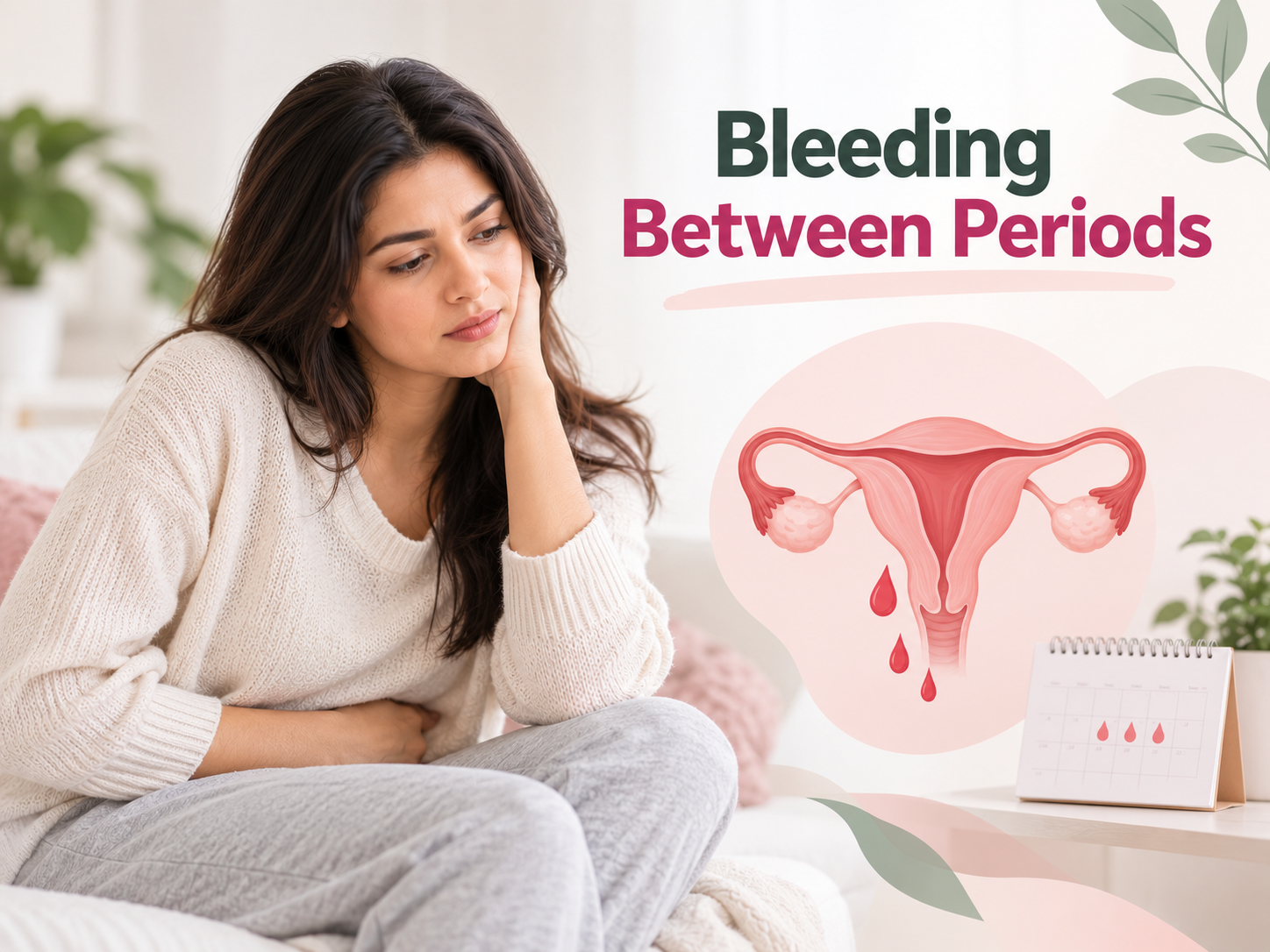
Bleeding between periods means you notice vaginal bleeding at a time when you would not normally expect your period. It may appear as a few spots of blood on your underwear, pink or brown discharge, or bleeding that is similar to a light period.
The medical term for bleeding between menstrual periods is intermenstrual bleeding. You may also hear it called spotting between periods or abnormal vaginal bleeding.
Light bleeding between periods can happen for several reasons. Hormonal changes, contraception and ovulation are possible causes. However, infections, cervical changes, womb polyps and fibroids can also lead to unexpected bleeding.
Although bleeding between periods is not usually caused by something serious, it should be checked by a healthcare professional. The right assessment can help identify the cause and determine whether treatment is needed.
What Causes Bleeding Between Periods?
There are several possible causes of bleeding between periods. Your age, menstrual cycle, contraception, medical history and other symptoms can help a clinician identify the most likely explanation.
1. Ovulation and hormonal changes
Some women notice light spotting around ovulation, which usually occurs around the middle of the menstrual cycle. Hormone changes during this time may contribute to a small amount of bleeding.
However, bleeding between periods should not automatically be assumed to be ovulation spotting, particularly if it is new, recurrent or accompanied by pain.
Hormonal changes can also affect the timing and pattern of your periods. Stress, significant weight changes and certain medical conditions may contribute to irregular menstrual cycles.
2. Hormonal contraception and breakthrough bleeding
Can birth control cause bleeding between periods? Yes. Hormonal contraception can change your usual bleeding pattern, especially when you first start using it or change methods.
Breakthrough bleeding may occur when using:
- The combined contraceptive pill.
- The progestogen-only pill.
- The contraceptive implant.
- The contraceptive injection.
- A hormonal intrauterine system (IUS).
Bleeding between periods on the pill can also occur after missed pills or when pills are not taken as directed. If you have missed pills and pregnancy is possible, seek advice about pregnancy testing and whether you need additional contraception.
Bleeding that continues, becomes heavy or develops after a previously stable pattern should be assessed rather than automatically blamed on contraception.
3. Pregnancy-related bleeding
Can you bleed between periods and still be pregnant? Yes. Some women experience spotting or light bleeding during early pregnancy, but bleeding alone cannot confirm whether you are pregnant or explain why it is happening.
If your period is late or you have had sex that could result in pregnancy, consider taking a pregnancy test at the appropriate time.
If you have missed a period and experience unusual bleeding with lower abdominal or pelvic pain, seek urgent medical assessment. These symptoms can indicate an ectopic pregnancy, which needs prompt investigation.
If you are pregnant and experience vaginal bleeding, contact your maternity team or an appropriate healthcare service for advice. Seek emergency help for severe abdominal pain, shoulder-tip pain, fainting, dizziness or heavy bleeding.
4. Polycystic ovary syndrome (PCOS)
Can PCOS cause bleeding between periods? It can contribute to irregular menstrual bleeding because PCOS may affect ovulation and the normal hormonal pattern of the menstrual cycle.
Some women with PCOS have long gaps between periods, while others experience unpredictable or prolonged bleeding.
Other possible signs include acne, increased facial hair, weight changes and difficulty becoming pregnant. These symptoms do not confirm PCOS on their own, so a medical assessment is important.
If you have PCOS and experience persistent irregular bleeding, discuss it with a GP or gynaecologist. Your clinician can assess your symptoms and decide whether further investigations are needed.
5. Uterine fibroids and womb polyps
Fibroids are non-cancerous growths that develop in or around the womb. They may cause heavy periods, pelvic pressure and, in some cases, bleeding between periods.
Womb polyps are growths that develop from the lining of the womb. They can also cause spotting or unexpected bleeding.
The location and size of a fibroid or polyp can affect the symptoms you experience. Some women have no symptoms, while others need investigation or treatment.
If bleeding is persistent or occurs alongside pelvic pain, pressure or changes in your usual periods, a clinician may recommend an examination or ultrasound scan.
6. Vaginal or cervical infections
Can an infection cause bleeding between periods? Yes. Some sexually transmitted infections, including chlamydia, can cause bleeding between periods or after sex. Inflammation of the cervix may also cause unexpected bleeding.
Other symptoms may include:
- Unusual vaginal discharge.
- An unpleasant change in discharge smell.
- Pain during sex.
- Burning or discomfort when passing urine.
- Pelvic pain.
Some infections cause few or no noticeable symptoms. If you think you may have an infection, arrange testing through a GP or sexual health clinic. Early diagnosis can help you receive the right treatment and reduce the risk of complications.
7. Stress and changes in weight
Can stress cause bleeding between periods? Stress may affect the hormones involved in your menstrual cycle and contribute to irregular periods or changes in bleeding patterns.
Significant weight gain, weight loss, restrictive eating and excessive exercise can also affect menstrual regularity.
These factors do not explain every episode of unexpected bleeding. If the bleeding continues or happens repeatedly, seek medical advice instead of assuming stress is the cause.
8. Perimenopause and other hormonal changes
Perimenopause is the transition before menopause. During this time, hormonal changes may cause periods to become less predictable.
You might notice that your periods become closer together, further apart, heavier or lighter. However, bleeding between periods should still be assessed, especially if it is new or persistent.
Any bleeding after menopause, which is generally defined as bleeding after 12 months without a period, needs prompt medical assessment. Do not assume it is simply a normal part of ageing.
9. Cervical changes and, rarely, cancer
Changes affecting the cervix or lining of the womb can sometimes cause abnormal vaginal bleeding. In rare cases, bleeding between periods may be a sign of cervical or womb cancer.
Most cases of unexpected bleeding are not caused by cancer. However, persistent bleeding, bleeding after sex or bleeding after menopause should not be ignored.
A healthcare professional can assess your symptoms and arrange appropriate investigations. Attending an appointment does not mean you have cancer; it helps identify the cause and determine the next steps.
Bleeding Between Periods With Other Symptoms
The symptoms that occur alongside bleeding can help your clinician decide what needs to be investigated.
Bleeding between periods with cramps or pelvic pain
Bleeding between periods with lower abdominal pain may be associated with hormonal changes, infections, fibroids or other gynaecological conditions.
If you have missed a period and experience unusual bleeding with abdominal pain, seek urgent medical advice because an ectopic pregnancy must be considered.
Sudden or severe pelvic pain, particularly with faintness, dizziness or heavy bleeding, requires urgent assessment.
Brown discharge and bleeding between periods
Brown discharge often means that blood has taken longer to leave the body and has changed colour. It may appear before or after a period or alongside light spotting.
However, colour alone cannot tell you the cause. If brown discharge is new, keeps returning, smells unusual or occurs with pain, itching or unexpected bleeding, arrange a medical assessment.
Bleeding between periods after sex
Bleeding after sex may be related to cervical changes, vaginal dryness, irritation or an infection. Sometimes, it can be associated with more serious conditions.
If you notice bleeding after sex, arrange an appointment with a GP or sexual health clinic, even if the bleeding is light.
When Should You Seek Medical Help?
You should arrange a GP or gynaecology appointment if you experience bleeding between periods, even if it is only light spotting. This is particularly important if the bleeding is new, recurrent or different from your usual cycle.
Seek medical advice if you notice:
- Repeated or persistent spotting between periods.
- Bleeding after sex.
- Bleeding with pelvic pain or unusual discharge.
- Changes in your normal menstrual cycle.
- Bleeding while using hormonal contraception that does not settle.
- Any bleeding after menopause.
Seek urgent medical assessment if you have missed a period and experience unusual bleeding with abdominal or pelvic pain, as this could be a sign of an ectopic pregnancy.
If you are pregnant and have bleeding with severe pain, shoulder-tip pain, fainting, dizziness or heavy bleeding, seek emergency medical help.
How Is Bleeding Between Periods Diagnosed?
The tests you need depend on your symptoms, age, medical history and the possibility of pregnancy or infection.
Medical history and examination
Your GP or gynaecologist may ask about your last period, usual cycle length, contraception, sexual health, pregnancy possibility and any other symptoms.
They may recommend an examination of the vagina and cervix, with your consent, to look for possible sources of bleeding.
Pregnancy and infection tests
A pregnancy test may be recommended if pregnancy is possible. Depending on your symptoms and circumstances, your clinician may also suggest testing for sexually transmitted infections.
Blood tests may be appropriate in some cases, particularly if you have heavy bleeding or symptoms that suggest anaemia or another health problem.
Ultrasound and other investigations
An ultrasound scan can help assess the womb, ovaries and surrounding structures. Depending on your symptoms and findings, a specialist may recommend hysteroscopy, which uses a thin camera to examine the inside of the womb.
Further tests are not necessary for everyone. Your clinician will choose investigations based on your individual circumstances.
How Is Bleeding Between Periods Treated?
Treatment depends on the underlying cause. There is no single treatment that is suitable for every woman.
- Hormonal changes: Your clinician may discuss options to manage irregular bleeding after assessing the cause.
- Contraception-related bleeding: You may need advice about taking your contraception correctly or considering an alternative method.
- Infections: Treatment depends on the infection identified. Some infections require antibiotics and partner notification or treatment.
- Fibroids or polyps: Monitoring, medication or a procedure may be recommended, depending on the findings and severity of symptoms.
- Pregnancy-related bleeding: Management depends on the stage of pregnancy and the cause of bleeding.
- Other medical conditions: Treatment will be tailored to the diagnosis.
Frequently Asked Questions
Is bleeding between periods normal?
Light spotting can occur for reasons such as ovulation or changes in hormonal contraception. However, bleeding between periods should be checked by a healthcare professional, especially if it is new, persistent or recurrent.
Why am I spotting between periods?
Possible causes include ovulation, hormonal contraception, pregnancy, infections, fibroids and womb polyps. The timing, amount of bleeding and other symptoms can help guide an assessment.
Why am I bleeding between periods but not on my period?
Bleeding outside your usual period may be related to hormonal changes, contraception, pregnancy or a gynaecological condition. A clinician can help determine the cause.
Can stress cause bleeding between periods?
Stress can affect menstrual regularity, but it should not automatically be assumed to explain unexpected bleeding. Arrange an assessment if bleeding continues or returns.
Why am I bleeding between periods on the pill?
Breakthrough bleeding can happen when starting or changing the pill, after missed doses or because of other factors. Follow the instructions for your specific pill and seek advice if bleeding persists or pregnancy is possible.
Can bleeding between periods mean cancer?
Cancer is an uncommon cause, but cervical or womb cancer can sometimes cause abnormal bleeding. Persistent bleeding, bleeding after sex and any bleeding after menopause should be assessed.
What tests are done for bleeding between periods?
Depending on your symptoms, tests may include a pregnancy test, infection screening, a physical examination, blood tests, ultrasound or hysteroscopy. Not everyone needs every test.
When should I see a gynaecologist for spotting?
Arrange an appointment if you experience bleeding between periods, particularly if it is persistent, recurrent, occurs after sex or is accompanied by pelvic pain or unusual discharge. Seek urgent help for symptoms that could indicate an ectopic pregnancy or significant blood loss.
Final Thoughts
Bleeding between periods can have several causes, from ovulation and hormonal contraception to infections, fibroids and other conditions. Although many causes are treatable, unexpected bleeding should not be ignored.
If you notice repeated spotting, bleeding after sex, pelvic pain or a change in your normal cycle, speak to a GP or gynaecologist. A timely assessment can help identify the cause and guide the right treatment.
Medical disclaimer: This article provides general health information and does not replace individual medical advice, diagnosis or treatment from a qualified healthcare professional.