
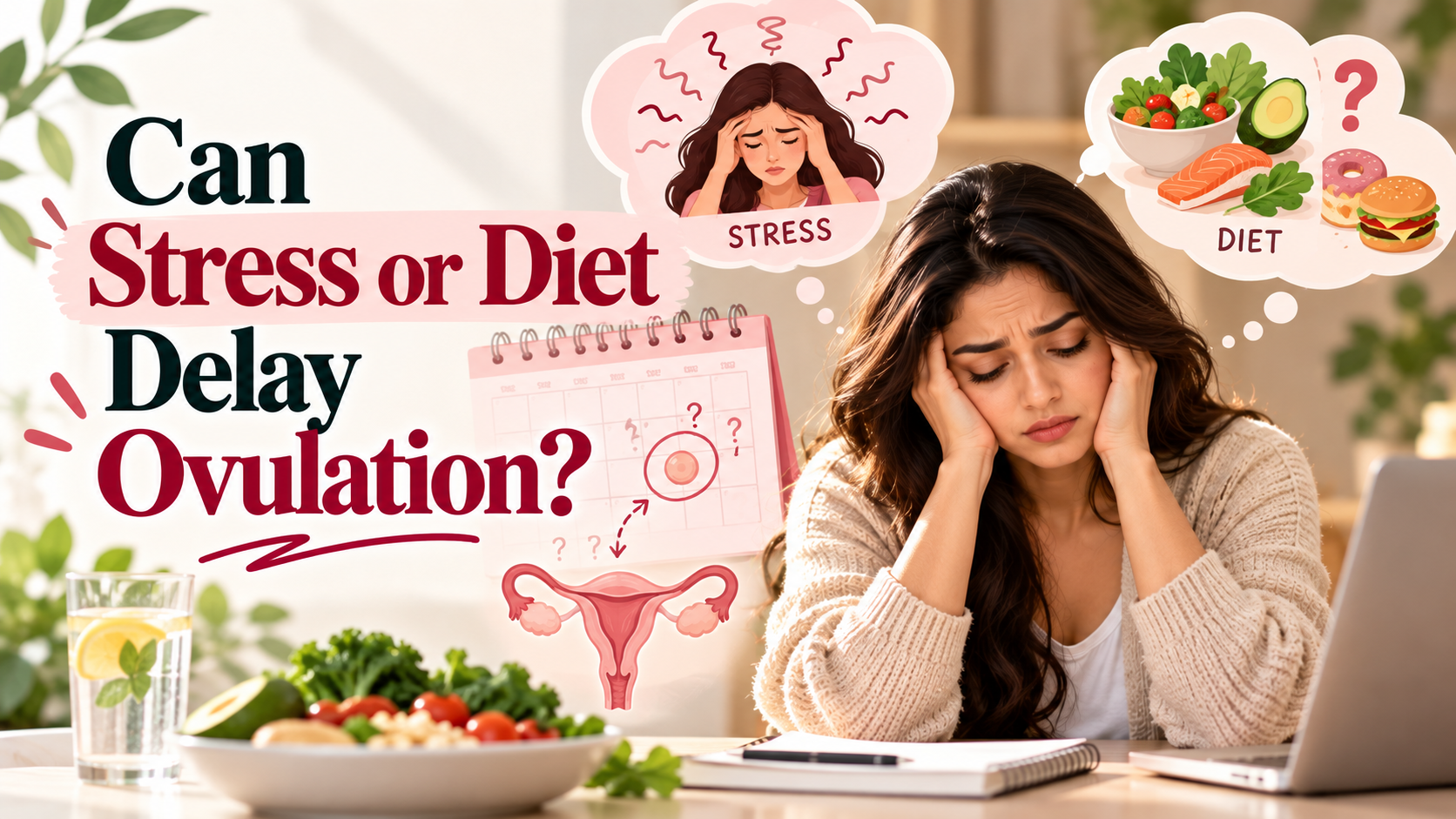
Wondering whether stress or diet delay ovulation? Yes, both can, since your brain and ovaries communicate through a finely balanced hormonal system that reacts to physical and emotional pressure. Significant stress, sudden weight loss, restrictive eating, or intense exercise can all push ovulation later in your cycle or, in more extreme cases, stop it happening at all that month.
How Stress Affects Ovulation
When you are under significant stress, your body produces more cortisol, which can interfere with the hormones responsible for triggering ovulation, particularly the signal sent from the brain to the ovaries. This does not usually happen with everyday, low level stress, but prolonged or intense stress, such as bereavement, major life changes, or ongoing anxiety, can be enough to delay or occasionally skip ovulation for a cycle.
How Diet and Weight Affect Ovulation
Your body needs a certain level of energy availability to maintain regular ovulation, since reproduction is deprioritised when the body senses it does not have enough resources. This means:
- Sudden or significant weight loss can delay or stop ovulation, even in women who are not underweight overall
- Very restrictive or low calorie diets can disrupt the hormonal signals needed for a regular cycle
- Rapid weight gain can also interfere with ovulation, particularly if it affects insulin and hormone levels
- Inconsistent eating patterns, such as regularly skipping meals, may contribute to hormonal disruption over time for some women
Why This Happens
The part of your brain that controls your reproductive hormones, the hypothalamus, is highly sensitive to signals about stress and energy balance. When it senses a lack of available energy or a high stress state, it can reduce or delay the release of the hormones that trigger ovulation as a protective response, essentially prioritising survival over reproduction. This is sometimes referred to as hypothalamic suppression when it becomes a persistent pattern. You can read further general background on the connection between lifestyle and ovulation here: additional reading.
Signs Stress or Diet May Be Affecting Your Cycle
- Your period arrives later than usual, or your cycle has become noticeably longer
- You have missed a period entirely without another clear explanation, such as pregnancy
- You have recently gone through a significant stressful period, started restrictive dieting, or increased exercise intensity
- Ovulation tests are coming back negative for longer than expected in your usual cycle
- Your periods have become lighter or less predictable alongside these lifestyle changes
What Can Help
Restoring regular ovulation often comes down to addressing the underlying cause rather than a quick fix. This might mean managing stress through rest, therapy, or lifestyle adjustments, ensuring you are eating enough to support your body’s needs, or moderating very intense exercise routines. For some women, these changes are enough to bring ovulation back to a regular pattern within a few cycles.
Frequently Asked Questions
How much stress does it take to delay ovulation? It varies between individuals, but usually it takes a significant or prolonged period of stress rather than everyday pressures to noticeably delay ovulation.
Can losing a small amount of weight delay my period? Yes, even a moderate but rapid weight loss can be enough to disrupt hormone levels and delay ovulation in some women.
If my ovulation is delayed, will it eventually happen that cycle? Often yes, ovulation may simply occur later than usual rather than not at all, though in some cases it can be skipped entirely for that cycle.
Can improving my diet and reducing stress bring my cycle back to normal? For many women, yes, addressing the underlying stress or nutritional gap can restore regular ovulation over a few cycles, though this varies by individual.
When should I see a doctor about stress or diet related cycle changes? If your periods have stopped for more than three months, or irregular cycles are persisting despite lifestyle changes, it is worth having your hormone levels checked.
Conclusion
Stress and diet have a genuine, well recognised effect on ovulation, since your body treats reproduction as something to postpone during times of pressure or insufficient energy. If your cycle has become unpredictable and you suspect stress or diet may be behind it, support is available to help you understand what is happening. Contact our team at Northwest Gynaecology for advice and, where needed, hormone testing.