
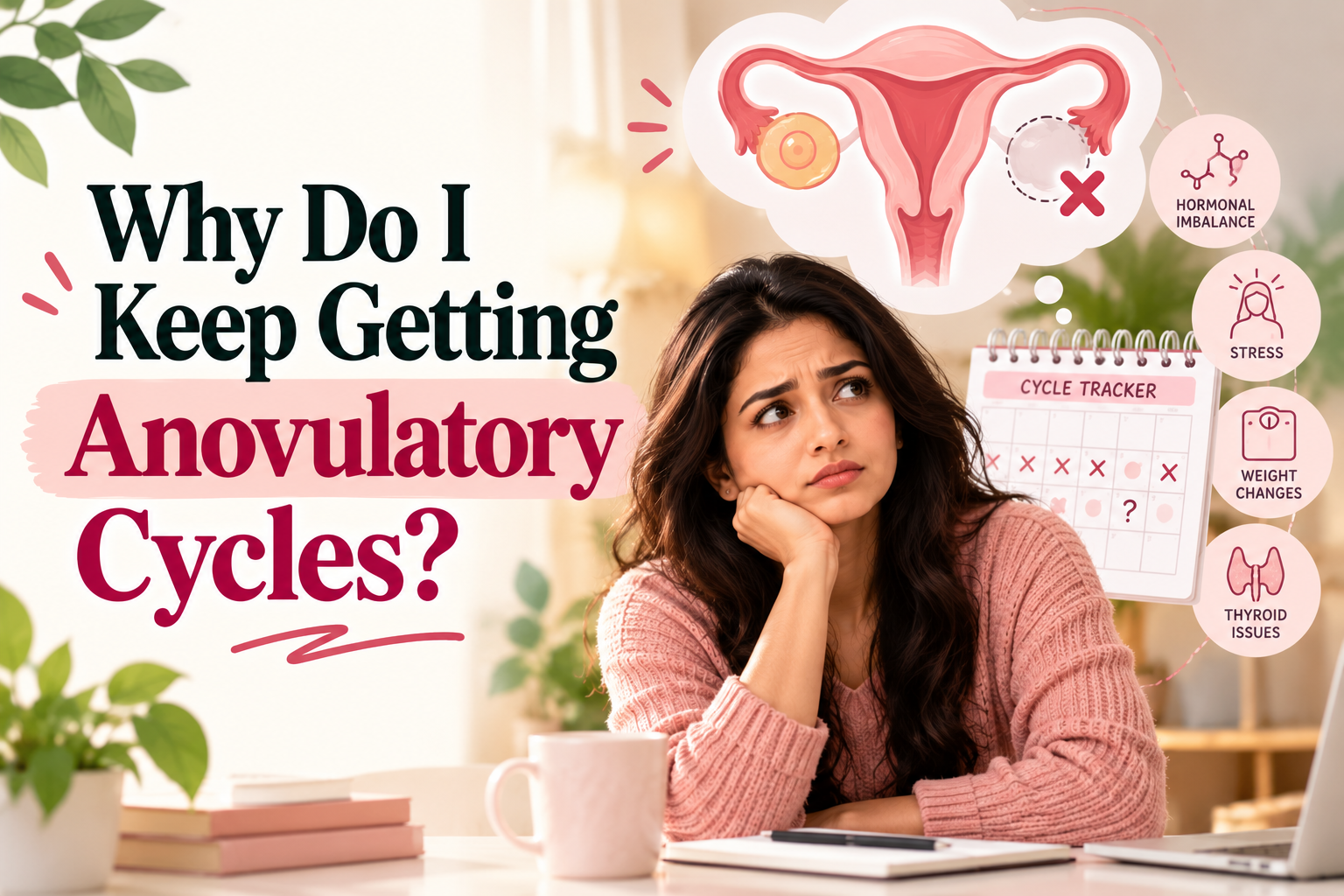
Anovulatory cycles, where a period arrives without an egg actually being released, are usually caused by hormonal conditions such as polycystic ovary syndrome, thyroid problems, high prolactin levels, extreme weight changes, or being close to perimenopause. Occasional anovulatory cycles are common and often harmless, but frequent ones are worth investigating, particularly if you are trying to conceive.
What an Anovulatory Cycle Actually Is
In a typical cycle, an egg matures and is released around the midpoint, after which hormone changes eventually trigger a period. When this release does not happen, bleeding can still occur due to the natural rise and fall of hormones, which is why it is easy to mistake for a normal period. This bleeding can sometimes be lighter, heavier, or less predictable than usual, though for some women it feels no different at all.
Common Causes
- Polycystic ovary syndrome (PCOS). One of the most common causes, where hormonal imbalance prevents regular ovulation from occurring.
- Thyroid problems. Both an overactive and underactive thyroid can interfere with the hormones needed for ovulation.
- High prolactin levels. Elevated prolactin, sometimes linked to certain medications or a pituitary gland issue, can suppress ovulation.
- Significant weight changes. Both being significantly underweight and being significantly overweight can disrupt the hormonal signals required for regular ovulation.
- Perimenopause. As you approach menopause, ovulation naturally becomes less frequent and less predictable.
- Excessive exercise or stress. Very intense training or prolonged, significant stress can suppress the hormones that trigger ovulation.
How You Might Notice It
Many women only discover that ovulation did not happen that month when trying to conceive, using ovulation tests, or tracking basal body temperature, since there is no clear temperature rise or positive test that cycle. Others notice changes in cycle length, unusually light or heavy bleeding, or longer gaps between periods.
When to Seek Advice
Having the occasional cycle without ovulation is common and not usually a concern, particularly around puberty, perimenopause, or after coming off contraception. However, it is worth speaking to a gynaecologist if:
- You are trying to conceive and suspect irregular ovulation
- Your cycles have become consistently unpredictable over several months
- You have other symptoms such as excess hair growth, acne, or significant weight change alongside irregular cycles
- Your periods have stopped altogether for more than three months without an obvious explanation
A blood test can check hormone levels such as progesterone, thyroid function, and prolactin, while a scan can assess your ovaries for signs of PCOS. You can read further general background on ovulation and hormonal health here: additional reading.
Managing This Type of Cycle
Treatment depends entirely on the underlying cause. This might mean thyroid medication, treatment for PCOS such as lifestyle changes or specific medications, or addressing an underlying weight or stress related cause. If you are trying to conceive, medication to help trigger ovulation is also an option your specialist can discuss with you.
Frequently Asked Questions
Can I still bleed if I have not ovulated that month? Yes, bleeding can still occur without ovulation, which is why these cycles are often mistaken for normal periods.
How common are anovulatory cycles? They are relatively common, particularly around puberty, perimenopause, and after stopping contraception, and occasional ones are not usually a cause for concern.
Does PCOS always cause anovulatory cycles? Not every cycle for someone with PCOS will be anovulatory, but irregular or absent ovulation is one of the defining features of the condition.
Can anovulatory cycles affect my fertility? Yes, if ovulation is not happening regularly, this can make it harder to conceive, which is why it is worth investigating if you are trying for a baby.
How is an anovulatory cycle diagnosed? It is usually identified through blood tests checking hormone levels, tracking basal body temperature, or a scan of the ovaries, often alongside a discussion of your cycle history.
Conclusion
Cycles without ovulation are more common than many women realise and often have a clear, treatable underlying cause once identified. If your cycles feel unpredictable or you are struggling to conceive, it is worth getting properly checked rather than guessing at the reason. Contact our team at Northwest Gynaecology to arrange the right tests and support.