
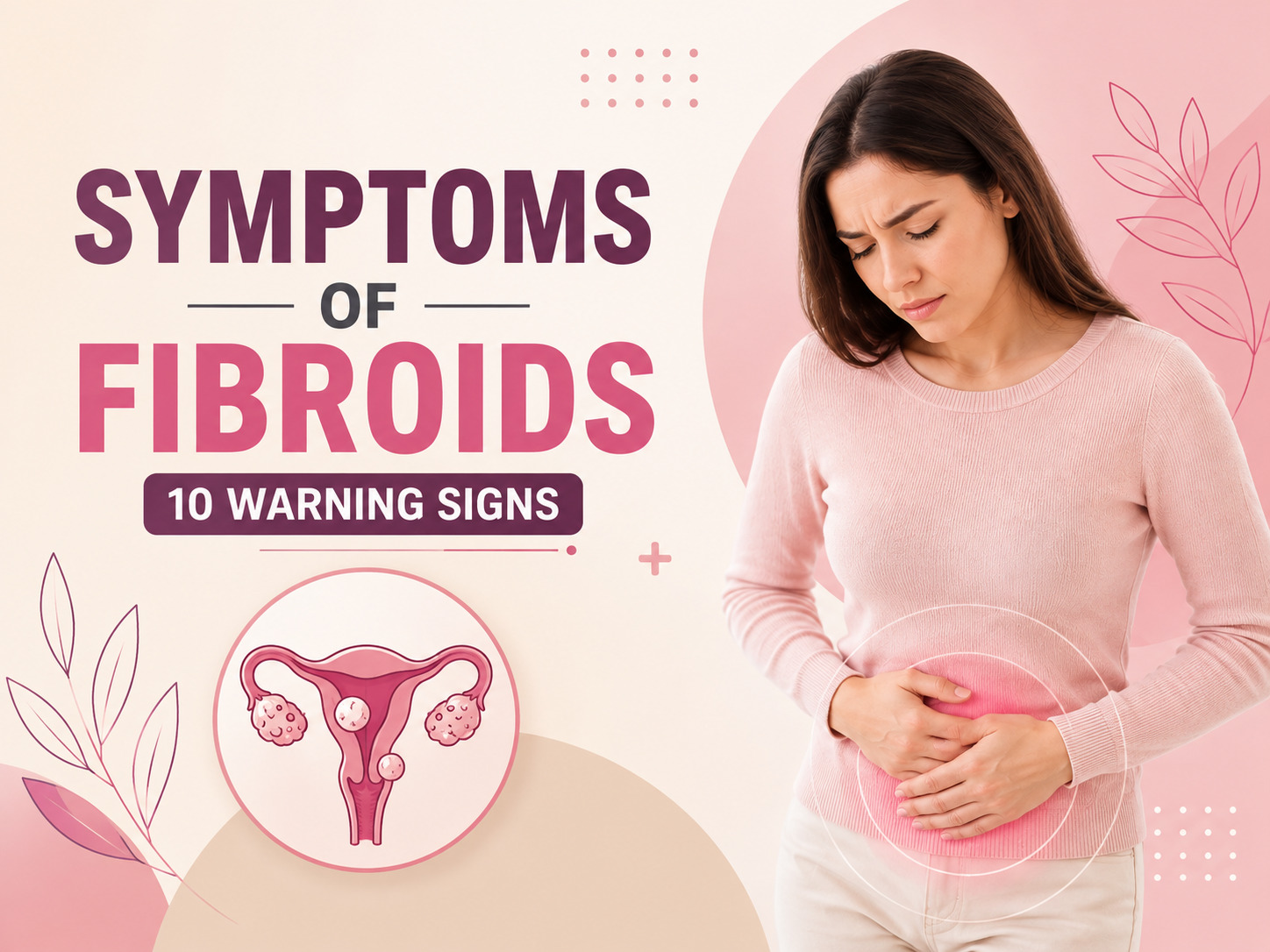
If you are wondering what are the symptoms of fibroids, you are not alone. Fibroids are common, non-cancerous growths that develop in or around the womb. Some women have no symptoms, while others may experience heavy periods, pelvic pressure, pain, bloating, or changes in bladder and bowel habits.
Most fibroids are not dangerous. However, symptoms can sometimes affect your daily life, work, relationships, or fertility. Knowing the warning signs can help you decide when it is time to speak with a GP or gynaecologist.
What Are Fibroids?
What exactly are fibroids?
Fibroids are growths made from muscle and fibrous tissue that develop in or around the womb.
They can be very small or much larger. Some women have one fibroid, while others have several.
Fibroids can also grow in different areas of the womb. Their size and location can affect the symptoms they cause.
Some women may have fibroids without knowing it.
Others may have symptoms that become difficult to ignore.
What Are the Symptoms of Fibroids?
How do I know if I have fibroids?
Fibroid symptoms can be different for every woman.
Some common signs include:
- Heavy or long-lasting periods
- Painful periods
- Pelvic pain or pressure
- Lower back pain
- Bloating or a swollen tummy
- Frequent urination
- Constipation
- Pain during sex
- Feeling very tired
- Difficulty getting pregnant
Having these symptoms does not automatically mean you have fibroids.
Several other gynaecological conditions can cause similar symptoms.
A proper medical assessment is needed to find the actual cause.
1. Heavy Periods
Can fibroids cause heavy periods?
Yes. Heavy periods are one of the most common symptoms linked with fibroids.
You may notice that your periods have become much heavier than they used to be.
You might need to:
- Change pads or tampons very often
- Use more than one type of period protection
- Wake up during the night to change protection
- Avoid certain activities because of heavy bleeding
- Deal with large blood clots
- Change clothes or bedding because of bleeding
Heavy periods can become more than just an inconvenience.
They can affect your work, social life, sleep, and emotional wellbeing.
If your periods are much heavier than before, it is worth speaking with your GP.
2. Painful Periods
Can fibroids cause painful periods?
Yes.
Some women with fibroids experience stronger cramps or pain during their periods.
The pain may feel like:
- Cramping
- Pressure
- A dull ache
- Heaviness in the lower abdomen
- Pain spreading to the lower back
Painful periods can have many causes, though.
Endometriosis and adenomyosis can also cause severe period pain.
If your period pain is becoming worse or stops you from doing normal activities, speak with a healthcare professional.
3. Pelvic Pain or Pressure
Can fibroids cause pelvic pain?
Yes.
A fibroid can sometimes create pressure in the pelvis, especially when it becomes larger.
You may notice:
- A dull ache
- A heavy feeling
- Pressure in the lower abdomen
- Pelvic discomfort
- A feeling of fullness
Some women describe it as feeling as though there is extra weight in their lower abdomen.
The size and position of the fibroid can affect how much pressure you feel.
4. Bloating or a Bigger-Looking Stomach
Can fibroids cause bloating?
Yes, larger fibroids can sometimes make the abdomen feel full or swollen.
You may feel bloated even when you have not eaten a large meal.
Some women also notice that their lower abdomen looks slightly larger.
However, bloating is very common and does not always mean you have fibroids.
Digestive problems, constipation, hormonal changes, and other conditions can also cause bloating.
Can fibroids make your stomach look bigger?
They can.
Large fibroids may increase the size of the womb and make the lower abdomen look or feel larger.
However, abdominal swelling can have many causes.
If you have persistent swelling along with heavy periods or pelvic pressure, it is worth getting checked.
5. Lower Back Pain
Can fibroids cause back pain?
Yes.
Some women with fibroids experience lower back pain or pressure.
This may happen when a fibroid becomes large enough to put pressure on nearby tissues.
The pain may be:
- Dull
- Aching
- Constant
- Worse at certain times of the month
Back pain is common and can have many causes.
If it happens alongside heavy periods, pelvic pressure, or other changes in your menstrual cycle, tell your doctor about all of your symptoms.
6. Frequent Urination
Can fibroids cause frequent urination?
Yes.
A larger fibroid can sometimes press against the bladder.
This may make you feel that you need to urinate more often.
You may also feel an urgent need to use the toilet.
However, frequent urination can also be caused by:
- UTIs
- Bladder conditions
- Diabetes
- Drinking large amounts of fluid
- Pregnancy
If you have frequent urination with burning, blood in your urine, fever, or pelvic pain, you should speak with a healthcare professional.
7. Bowel Problems
Can fibroids cause constipation?
They can.
A larger fibroid may put pressure on the bowel.
This can sometimes make it harder to pass stool.
You may also experience:
- Constipation
- Bloating
- Pressure in the lower abdomen
- Discomfort when opening your bowels
- A feeling that your bowel has not completely emptied
Constipation is very common and does not automatically mean you have fibroids.
But persistent bowel changes should be discussed with your doctor.
8. Pain During Sex
Can fibroids cause painful sex?
Yes, some women with fibroids experience pain or discomfort during sex.
The location and size of the fibroid can affect where the pain is felt.
However, painful sex can have many other causes.
These include:
- Endometriosis
- Vaginal dryness
- Pelvic infections
- Pelvic floor problems
- Hormonal changes
If sex has become repeatedly painful, do not assume that you simply have to live with it.
A medical assessment can help find the cause.
9. Anaemia and Feeling Very Tired
Can fibroids cause anaemia?
Yes.
Heavy bleeding from fibroids can sometimes lead to iron deficiency and anaemia.
When this happens, you may feel:
- Very tired
- Weak
- Dizzy
- Short of breath
- Less able to exercise
- Less able to concentrate
You may also notice that you look paler than usual.
If your periods are very heavy and you feel unusually tired, tell your GP.
A blood test can help check whether anaemia is present.
10. Difficulty Getting Pregnant
Can fibroids affect fertility?
Most women with fibroids can become pregnant.
However, some fibroids can affect fertility depending on their size and location.
Fibroids that grow into the inside of the womb may have a greater effect on fertility than some fibroids located elsewhere.
If you are trying to get pregnant and have fibroids, your doctor can discuss whether further tests or treatment may be useful.
Can fibroids cause miscarriage?
Having fibroids does not mean that you will have a miscarriage.
Many women with fibroids have healthy pregnancies.
However, certain fibroids may increase the risk of pregnancy complications.
If you are pregnant or planning a pregnancy and know you have fibroids, discuss this with your doctor.
Can Fibroids Cause Irregular Periods?
Do fibroids make periods irregular?
Fibroids are more commonly associated with heavy or prolonged bleeding, but some women may notice changes in their normal menstrual pattern.
Irregular periods can also have many other causes.
These include:
- Hormonal changes
- PCOS
- Thyroid problems
- Stress
- Pregnancy
- Changes in contraception
- Perimenopause
If your periods suddenly become irregular, it is worth finding out why.
Can Fibroids Grow After Menopause?
Do fibroids get bigger after menopause?
Fibroids often become smaller after menopause because hormone levels change.
However, new or changing symptoms after menopause should still be checked.
If you experience new vaginal bleeding, pelvic pressure, pain, or abdominal changes after menopause, speak with your doctor.
Do not automatically assume the symptoms are caused by old fibroids.
Are Fibroids Dangerous?
Should I be worried if I have fibroids?
Most fibroids are non-cancerous.
Many women have fibroids without needing treatment.
The main concern is usually the symptoms they cause.
For example, heavy bleeding can lead to anaemia.
Large fibroids can also put pressure on the bladder or bowel.
If symptoms are affecting your everyday life, treatment options can be discussed with your healthcare professional.
Can Fibroids Go Away on Their Own?
Do fibroids disappear without treatment?
Fibroids do not always need treatment.
If they are small and are not causing symptoms, your doctor may simply recommend monitoring them.
Fibroids can also become smaller after menopause.
If symptoms are causing problems, your doctor may recommend medication, a procedure, or surgery depending on your individual situation.
When Should I See a Gynaecologist for Fibroids?
What symptoms mean I should get checked?
Speak with your GP if you have symptoms that could be linked to fibroids.
This is especially important if:
- Your periods have become very heavy
- Your periods are lasting longer
- Your period pain is getting worse
- You have ongoing pelvic pain
- Your stomach feels swollen
- You need to urinate frequently
- You have ongoing constipation
- Sex has become painful
- You feel extremely tired
- You are having difficulty getting pregnant
Your GP may recommend further tests or refer you to a gynaecologist.
How Are Fibroids Diagnosed?
What tests are used to find fibroids?
Your doctor will first ask about your symptoms.
They may also examine your abdomen and pelvic area.
An ultrasound scan is commonly used to look for fibroids.
The scan can help show:
- Whether fibroids are present
- How many fibroids there are
- Their size
- Their location
- How they may be affecting the womb
In some cases, additional tests or scans may be needed.
Your doctor will decide what is appropriate based on your symptoms and scan results.
Will I Need an Internal Ultrasound?
Is a transvaginal ultrasound always needed?
Not always.
The type of ultrasound depends on what your doctor needs to examine.
A transvaginal ultrasound can provide a detailed view of the womb and surrounding organs.
Your healthcare professional will explain the scan before it takes place.
You can ask questions if you are worried or unsure about the procedure.
How Are Fibroids Treated?
Do all fibroids need treatment?
No.
If your fibroids are not causing symptoms, treatment may not be needed.
Your doctor may simply monitor them.
Treatment becomes more likely when fibroids cause problems such as heavy bleeding, pain, pressure, or fertility concerns.
What Medicines Can Help Fibroid Symptoms?
Can medicine treat fibroid symptoms?
Yes.
Depending on your symptoms, your doctor may recommend medicine to help control:
- Heavy bleeding
- Period pain
- Pelvic discomfort
The right treatment depends on your health, age, symptoms, and whether you want to become pregnant.
Some medicines can control symptoms without removing the fibroids themselves.
Can Fibroids Be Removed?
Do fibroids always need surgery?
No.
But surgery may be considered when fibroids are large, symptoms are severe, or other treatments have not helped.
One procedure is called a myomectomy.
During a myomectomy, the fibroids are removed while the womb is kept in place.
This may be an option for women who want to preserve their fertility.
Another option is a hysterectomy, which removes the womb.
This means pregnancy is no longer possible, so it is generally considered only when appropriate for the individual woman.
Can Fibroids Be Treated Without Surgery?
Are there non-surgical treatments for fibroids?
Yes.
Some women can manage their symptoms with medication.
Another option for some women is uterine artery embolisation.
This procedure reduces the blood supply to the fibroids, which can cause them to shrink.
Not every treatment is suitable for every woman.
Your treatment plan should take into account your symptoms, the size and location of your fibroids, your general health, and whether you want children in the future.
Can Fibroids Affect Your Daily Life?
Do fibroids affect quality of life?
They can.
Fibroids may not be dangerous, but their symptoms can have a major effect on everyday life.
Heavy periods may make work and travel difficult.
Pelvic pressure may make exercise uncomfortable.
Frequent urination can disturb your sleep.
Pain can affect relationships and intimacy.
If fibroids are affecting your normal routine, you do not have to simply accept the symptoms.
It is worth discussing your options with a healthcare professional.
Frequently Asked Questions About Fibroids
What are the symptoms of fibroids?
Common symptoms include heavy or painful periods, pelvic pressure, lower back pain, bloating, frequent urination, constipation, pain during sex, tiredness caused by heavy bleeding, and sometimes difficulty getting pregnant.
How do I know if I have fibroids?
Symptoms can suggest fibroids, but they cannot confirm them. A medical assessment and ultrasound scan can usually help determine whether fibroids are present.
Can fibroids cause heavy periods?
Yes. Heavy or prolonged periods are among the most common symptoms associated with fibroids.
Can fibroids cause pelvic pain?
Yes. Fibroids can cause pelvic pain, pressure, or a feeling of heaviness in the lower abdomen.
Can fibroids cause bloating?
They can. Larger fibroids may create pressure in the abdomen and cause a feeling of fullness or swelling.
Can fibroids cause back pain?
Yes. Some women experience lower back pain or pressure because of the size or location of their fibroids.
Can fibroids make your stomach look bigger?
Large fibroids can sometimes make the lower abdomen look or feel larger. However, abdominal swelling has many possible causes.
Can fibroids cause frequent urination?
Yes. A larger fibroid can press against the bladder and make you feel that you need to urinate more often.
Can fibroids affect fertility?
Most women with fibroids can become pregnant. However, some fibroids may affect fertility depending on where they are located.
Can fibroids cause painful sex?
Yes. Some women experience pain or discomfort during sex when they have fibroids.
Can fibroids cause anaemia?
Yes. Heavy menstrual bleeding caused by fibroids can lead to iron deficiency and anaemia.
Can fibroids cause irregular periods?
They can sometimes be associated with changes in bleeding patterns, although irregular periods have many other possible causes.
Can fibroids grow after menopause?
Fibroids often shrink after menopause. New or changing symptoms after menopause should still be assessed by a doctor.
Are fibroids dangerous?
Most fibroids are non-cancerous and are not dangerous. They may still need treatment if they cause heavy bleeding, pain, pressure, anaemia, or other problems.
Can fibroids go away on their own?
Some fibroids may become smaller over time, especially after menopause. Fibroids that are not causing symptoms may not need treatment.
When should I see a gynaecologist for fibroids?
You should consider seeing a gynaecologist when symptoms are persistent, severe, affecting your daily life, or when fibroids need further investigation or treatment.
How are fibroids diagnosed?
A doctor will usually ask about your symptoms and may examine your abdomen or pelvic area. An ultrasound scan is commonly used to identify fibroids and assess their size and location.
How are fibroids treated?
Treatment depends on your symptoms, the size and location of the fibroids, your general health, and whether you want children. Options may include monitoring, medication, non-surgical procedures, or surgery.
Final Thoughts
If you have been searching “what are the symptoms of fibroids?”, remember that fibroids do not always cause symptoms.
When they do, heavy periods are one of the most common signs.
You may also notice pelvic pressure, bloating, back pain, frequent urination, constipation, painful sex, or tiredness from heavy bleeding.
Most fibroids are non-cancerous.
But you should not ignore symptoms that are affecting your daily life.
If your periods have become much heavier, your pelvic pain is getting worse, or you have ongoing pressure or other unusual changes, speak with your GP.
An assessment and ultrasound can help identify what is causing your symptoms.
If fibroids are found, a gynaecologist can discuss the treatment options that best fit your symptoms, health, and future pregnancy plans.
Medical Disclaimer
This article is for general education only. It does not replace a medical examination, diagnosis, or personalised treatment. If you have very heavy bleeding, severe pain, unusual bleeding, or symptoms that are getting worse, speak with a qualified healthcare professional.